The Story
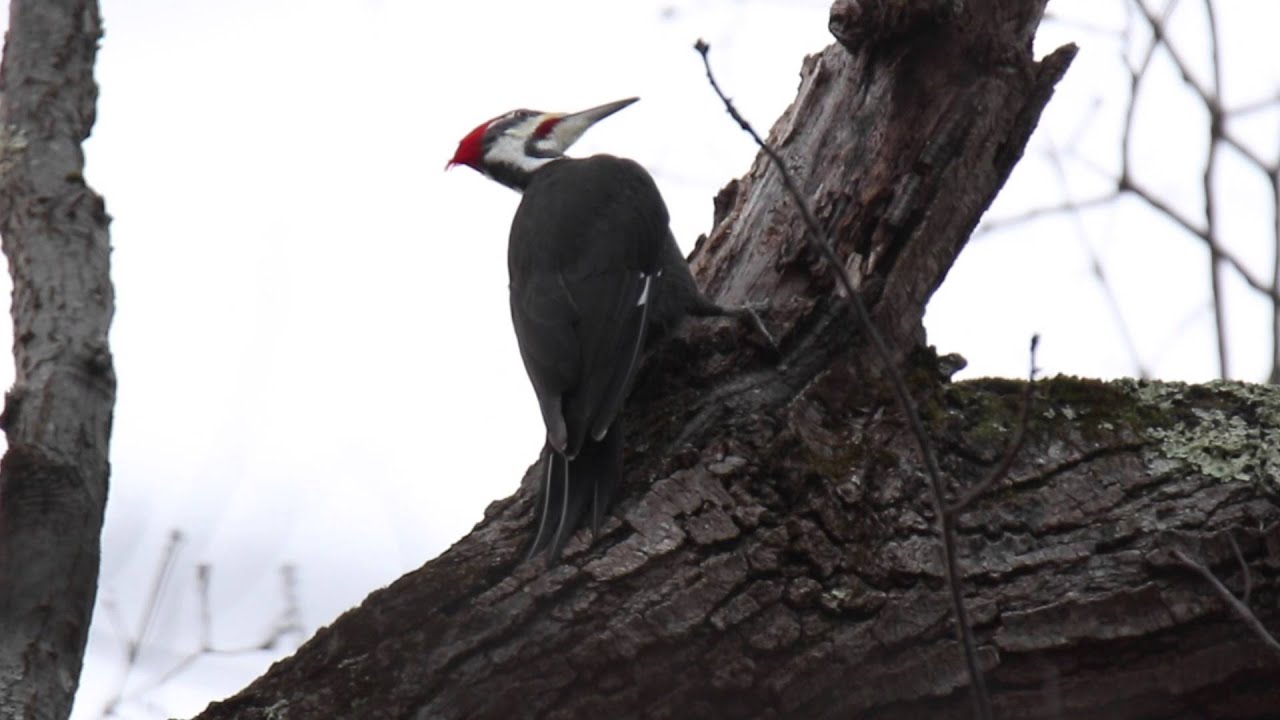
It is ten past three on Christmas afternoon in Lincoln Woods, Rhode Island, the branches are bare, and a pileated woodpecker is hitting a broken tree hard enough to sound like machinery.
Then he stops. Between bursts the bird looks around, bill angled up at the white sky, and the pause gives a clean look at the field marks: mostly black, very large, a red crest, a white stripe down the neck. The sex is in the red mustache behind the bill. A female's mustache is black, so this is a male. The species runs 16 to 19 inches long, about crow-sized, and across most of North America no woodpecker is bigger.
The hour is less strange than the date. Drumming is most frequent in the morning, but it can occur through the day, so ten past three is no surprise. The better question is the month. Drumming increases in early spring as courtship begins, and here he is in late December with nobody to tell him it is a holiday. Nothing in the footage says why he is at it today. Drumming also proclaims a territory, and the pileated is a permanent resident with the same range in winter as the rest of the year. That much is on record. His reasons for today are not.
The tree looks right for the work. Drumming usually happens atop a dead tree that resonates, and this one is a thick trunk broken off at the top, its upper end weathered gray with much of the bark gone. The sound is fast and hard, more power tool than bird, and it comes in short bursts with long gaps in between.
Dead wood has a second use, and that one is dinner. Carpenter ants may be up to 60 percent of a pileated's diet, and the way to them runs through rot: the bird gouges deep to reach the nests, and the rectangular holes it leaves are a signature of the species. This afternoon he is using his tree as a drum.