The Story
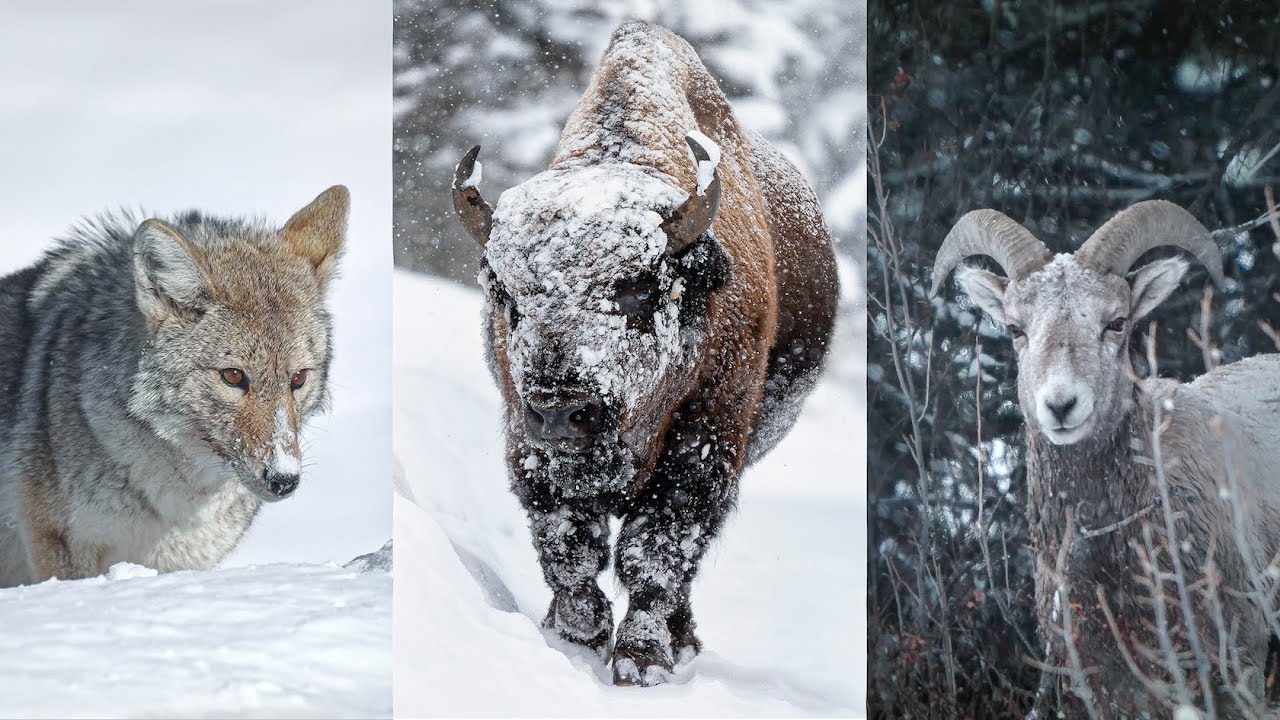
Snow keeps falling as an American bison plods straight toward the camera. Its face is a white mask, snow clings to the tips of its short horns, and the shaggy forelegs are packed white to the hooves.
This is Yellowstone in late January, on a week of winter camping and photography in the park, where the cold in Lamar Valley drops below zero Fahrenheit. For the first stretch of the trip, bison are almost the only animals in sight, first met on the drive in.
In the frame the snow clings to the brow, the hump and the forelegs. A bison carries thick, long, dark hair on the head and the front of the body, with shorter hair on the rear. Its winter insulation comes in layers: thick skin, underfur, long guard hairs and fat.
The hump over the front shoulders is working gear. Big shoulder and neck muscles let a bison swing its head side to side and sweep snow off the grass beneath, which is how it reaches food once the ground is buried.
Winter is not gentle in this park. Yellowstone's central plateau reaches 7,875 feet, with temperatures reaching -44°F. In an average winter about 9 of every 100 adult bison in the park die, and 20 to 40 of every 100 first-year animals may not see spring. Winter groups are small, averaging about 20 animals.
Later in the trip comes the encounter the photographer ranks among his favorites: a big bull walking down the middle of the road. Yellowstone bulls weigh up to 2,000 pounds, mature bulls can reach 5.5 to 6.5 feet at the hump, and bison have injured more people in the park than any other animal. He parks the Jeep and reaches for a long telephoto lens.