The Story
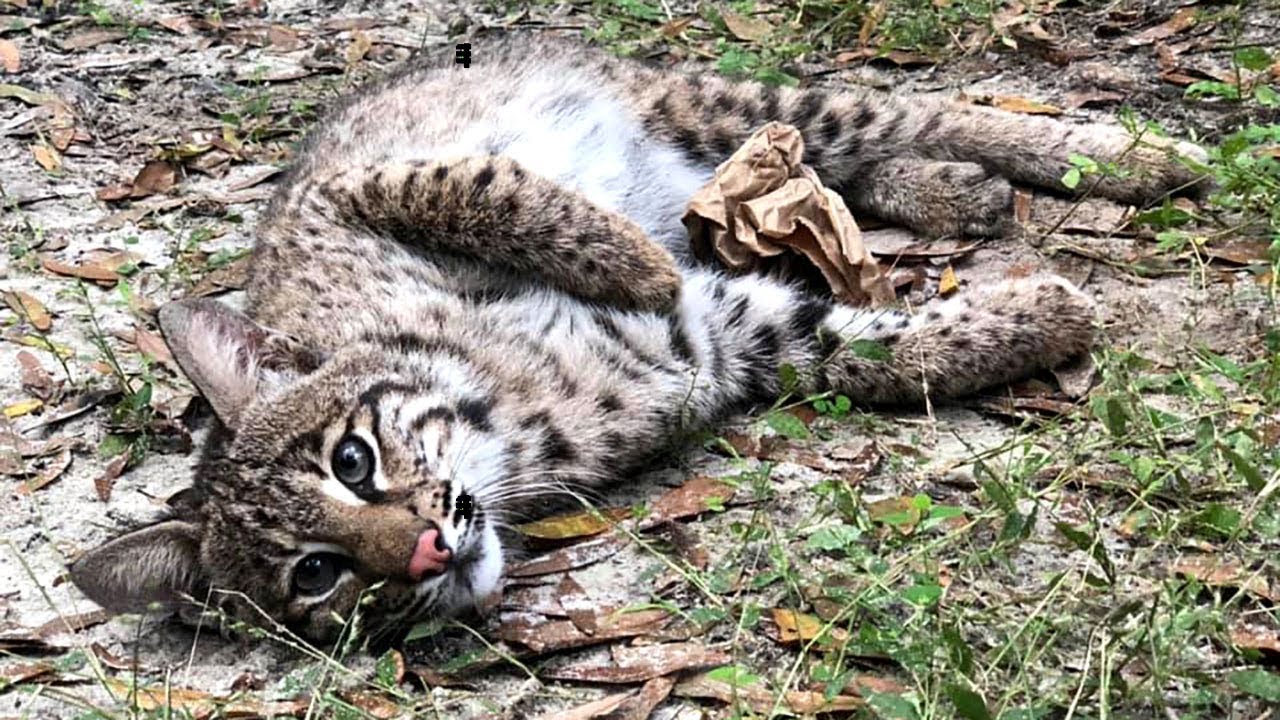
A bobcat lies belly-up in sandy leaf litter, head upside down, one wide eye level with the lens. This is Flint, and he is not going back to the wild.
Rehabilitation was the plan. Then the work at Big Cat Rescue in Tampa, Florida, turned up the problem: Flint has deformed bones and a pelvic canal that is narrowed and collapsed. With that frame he could not eat large whole prey or survive on his own, and the sanctuary was granted permission to keep him as a permanent resident.
That diagnosis hits a bobcat where it lives. Lynx rufus is strictly a meat eater, taking mostly rabbits and hares, with rodents, birds, snakes, lizards and small deer besides. The hunt runs on stealth. A bobcat stalks, sets its back feet in the prints of its front feet to stay quiet, then pounces and kills with a bite to the vertebrae of the neck. It often covers 2 to 7 miles in an evening hunting and patrolling its territory. A cat that cannot eat what it catches has no margin out there.
The field marks on Flint are the real thing: a buff coat spotted and striped in brown and black, with a pale belly. Bobcats also wear ruffs of hair on the sides of the head like sideburns, black on the backs of the ears with white spots, and a short bobbed tail, black at the tip and white underneath.
In the wild, southeastern bobcats use bottomland hardwood forests and coastal swamps, and they are growing used to towns and suburbs there, though they are seldom seen.
Flint has drawn the easier hand. Most wild bobcats live five to 15 years; in human care the median is about 18. He seems to have accepted the trade. Tucked against his belly lies a crumpled paper bag, handled like the most important object in Florida.