The Story
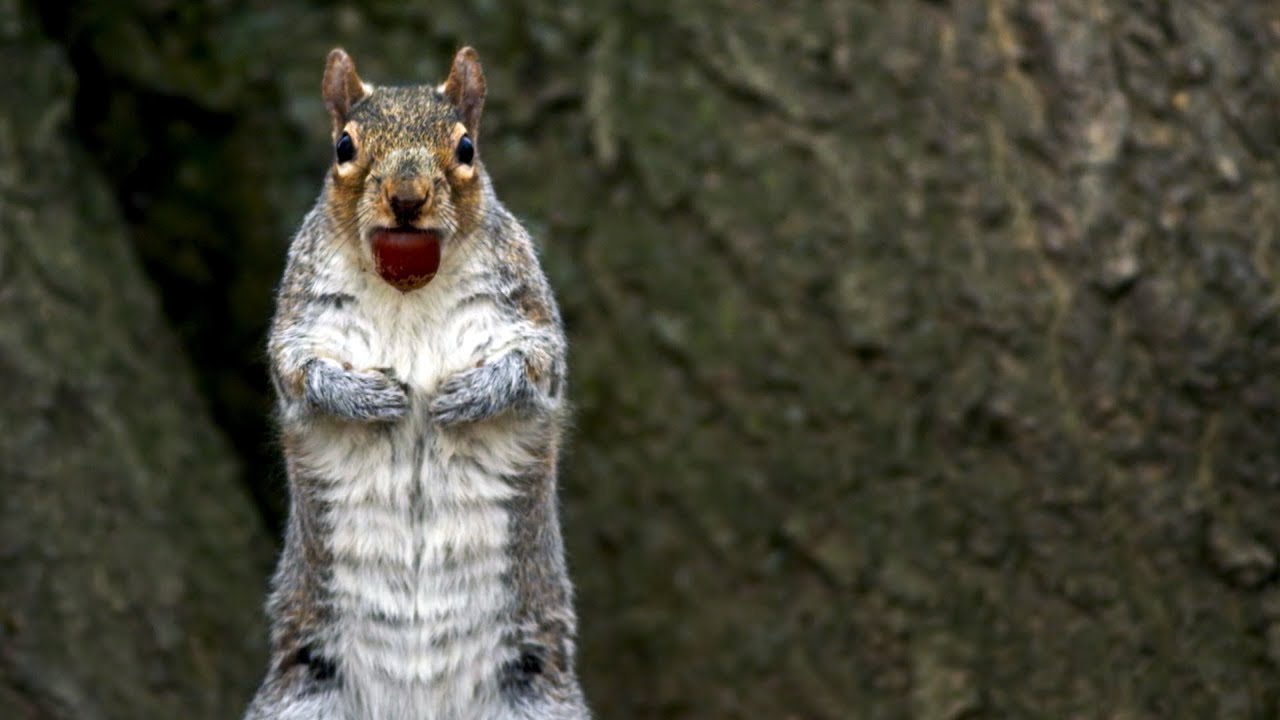
An eastern gray squirrel on the woodland floor lashes its tail at a stranger offering free acorns. The stranger is a robotic squirrel with a hidden camera, and it is about to film a crime.
The fluffed, lashing tail is no idle gesture. Gray squirrels talk with postures as well as calls, and tail flicking is part of that vocabulary. Once the newcomer proves a pushover, the squirrel takes the acorn and buries it at once.
That burial is the species' winter plan in miniature. Gray squirrels scatter-hoard, tucking nuts into many separate caches instead of one larder, then find them again by memory and smell. In a 1991 enclosure study, eight hand-raised gray squirrels recovered twice as many of their own nuts as another squirrel's and planned routes through their caches. In a 1997 experiment they could remember up to 24 cache locations for up to two months.
A scattered larder has one weakness. Anyone can dig. A second squirrel has watched where the acorn went in, and as soon as it is covered she moves in and digs it up. Theft is fine until the owner notices, and then the claws come out in a scrambling chase.
The next round goes to the victim. With the thief possibly still watching, he makes a grand show of burying his nut in an empty patch of ground. She waits for the performance to end, sneaks in and finds nothing. The acorn never left his mouth, and now he can eat it or bury it somewhere she is not looking.
Out in the woods, an acorn that stays lost is not wasted, since many unrecovered nuts eventually germinate and gray squirrels essentially plant nut trees. The thief, meanwhile, has not retired. The robot offers one more nut, this one with a camera inside, and she takes it.