My Crittercam
My Crittercam › Cougar

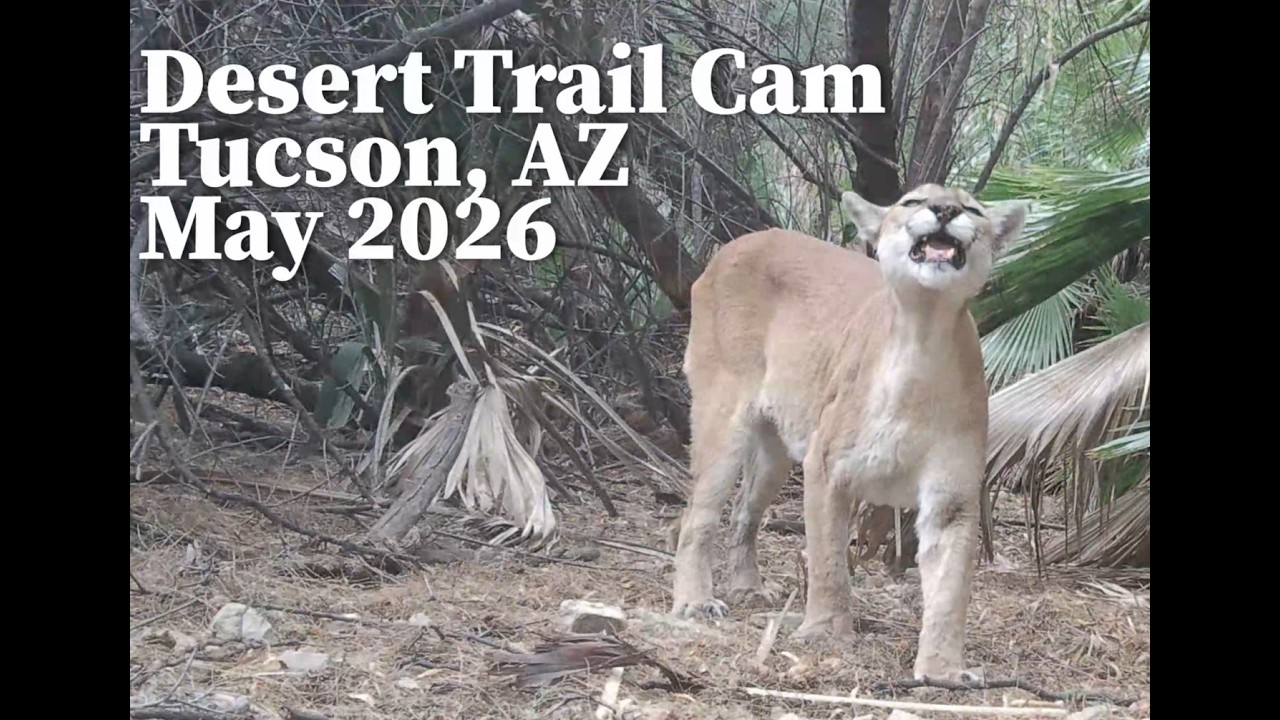
Mountain lion curls its lip at a scent mark

A tan mountain lion stands facing the camera among palm fronds and bare branches, head tilted up, eyes half closed and mouth open with lips curled back, the word Cam in white burned in at top left.

Footage: Lo Fi Outdoors · 9:56 · uploaded June 6, 2026
Written by My Crittercam · published November 6, 2026

The Story

A mountain lion stands in the palm litter in Tucson, lifts its chin, and peels its lips back off an open mouth, eyes squeezed nearly shut. It looks mid-yowl. It is doing something quieter than that.

This is the flehmen response, caught on a trail camera in May 2026. The filmer explains it plainly: cats and some other mammals carry an olfactory organ in the mouth, the kind snakes are known for, and they use it to read hormones. The grimace is the cat sampling the ground, not threatening anything.

The spot is the story. By the filmer's account, another mountain lion had urinated right here, and this one now has to cover the other lion's smell with its own. The filmer allows that the javelinas living on this ground could be part of the scent too. Either way, the cat is reading a message before answering it.

Scent and claw marks are how cougars claim ground. They mark territory with urine-scented mounds, and with claw marks on trees, stumps and occasionally fence posts, 4 to 8 feet up for an adult. Males defend territories from other males; a male's territory can reach 500 square miles. Cougars are solitary and elusive, and this one stands alone in the frame with whatever the last lion left.

The frame itself is daylight, with dry leaves underfoot and palm fronds and bare stems crowding in behind. The coat is plain tan, unspotted, with a whitish throat and chest. That uniform coat settles the usual trail camera question at once: bobcats are much smaller, with short bobbed tails and spotted, streaked coats.

Daylight is not the usual hour. Cougars are most active from dusk to dawn but may hunt at any time of day, and they rely on dense brush, steep canyons and boulders to stay hidden while they do. This thicket offers exactly that kind of cover, and the same stretch of country also holds a lion filmed stalking, probably after a javelina.
Field Guide

A mountain lion near Tucson, Arizona, tips its head back in the flehmen response at a spot where another lion had urinated. Full field guide for the Cougar

Common nameCougar
Scientific namePuma concolor
FamilyFelidae (cats)
SizeMales 7-8 ft long nose to tail tip, up to 30 in at the shoulder; females 5-7 ft; tail about one-third of total lengthCalifornia Department of Fish and Wildlife · Animal Diversity Web, University of Michigan
WeightWashington adult males average about 140 lb, rarely 180 lb; females rarely exceed 110 lbWashington Department of Fish and Wildlife
DietCarnivore; deer are the preferred and most common prey, plus elk, moose, mountain goats and wild sheep; other prey, especially for younger cougars, includes raccoons, coyotes and rabbitsWashington Department of Fish and Wildlife · Animal Diversity Web, University of Michigan
Active whenMost active dusk to dawn, but may hunt at any time of dayWashington Department of Fish and Wildlife
RangeCanada south to South America, now mainly in mountainous, relatively unpopulated areas; eastern North American populations exterminated except Florida panthers; wanderers confirmed in MissouriNatureServe Explorer · Animal Diversity Web, University of Michigan · Missouri Department of Conservation
LifespanAbout 10-13 years (NPS); up to 18 to 20 years in the wild (ADW)National Park Service · Animal Diversity Web, University of Michigan
Conservation statusIUCN Red List: Least Concern; NatureServe global rank G5; Florida panther (P. c. coryi) listed Endangered by USFWS under the US Endangered Species ActAnimal Diversity Web, University of Michigan · NatureServe Explorer
Cam notes · Cameratrail camera
Cam notes · Time of dayday
Cam notes · SeasonMay, late spring
Cam notes · PlaceTucson, Arizona

Habitat

Behavior

Questions

Do mountain lions really live this close to Tucson?

Cougars range from Canada south to South America, now mainly in mountainous, relatively unpopulated areas, in habitats from forest to dry brush country wherever there is cover and prey. More than 250,000 GPS locations from the Santa Monica Mountains show they prefer natural areas and attempt to avoid contact with humans.Animal Diversity Web, University of Michigan · National Park Service

Is it safe to have a dog out where mountain lions roam?

Younger cougars take raccoons, coyotes and rabbits, and occasionally pets and livestock, so pets are on the list. Deer are still the preferred and most common prey.Washington Department of Fish and Wildlife

How can you tell a mountain lion from a bobcat on camera?

A cougar has a long, heavy tail about one-third of its total length and a uniform, unspotted tan coat. Bobcats are much smaller, with short bobbed tails and spotted, streaked coats.California Department of Fish and Wildlife · Animal Diversity Web, University of Michigan · National Park Service · Missouri Department of Conservation

Latest clips