The Story
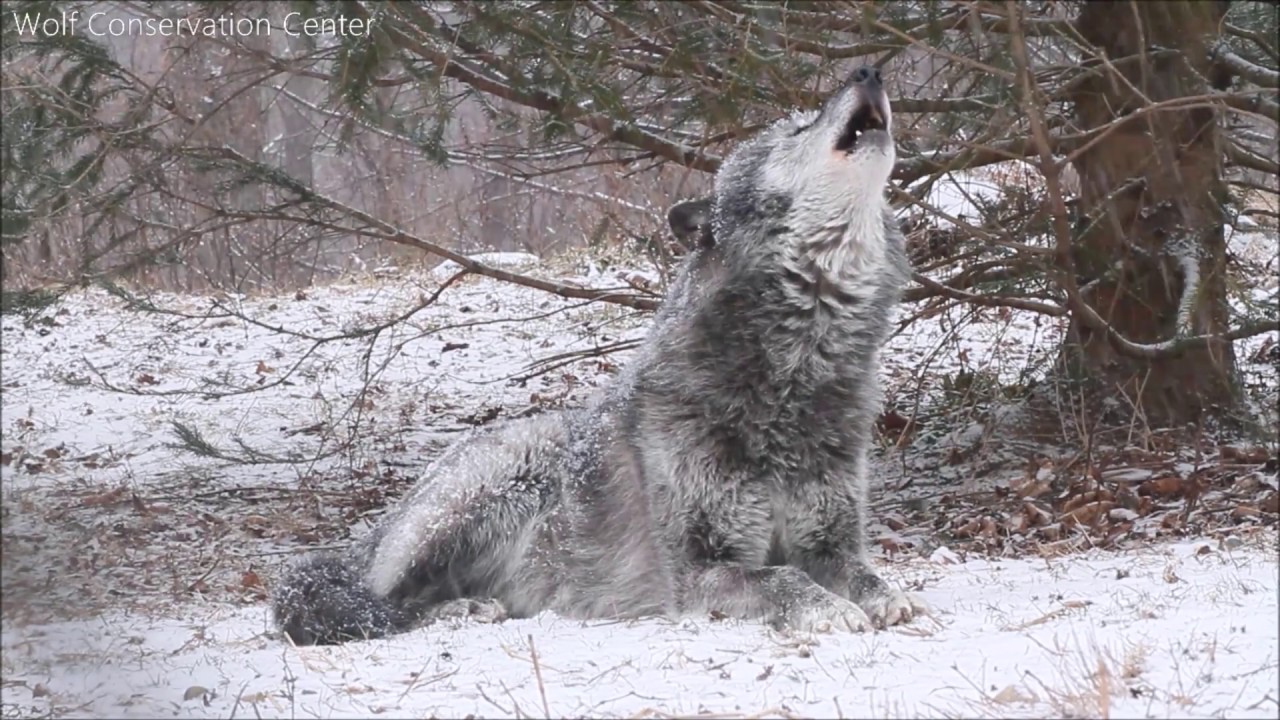
For a black wolf, Zephyr shows a lot of silver. This gray wolf lies with his chest up and his hips rolled to one side in falling snow in South Salem, New York, aims his muzzle up through the low branches and howls.
The color takes some explaining. Dark hair runs down his chest and shoulders, shot through with silver, while the muzzle and throat turn pale. The Wolf Conservation Center calls him a black wolf anyway, and the name is no contradiction: gray wolf is the species, black one of its coats. In Yellowstone, gray and black wolves occur about 50:50, with white the rare one.
His mouth opens just enough to show teeth. At least one other wolf joins in, so the solo does not stay a solo. A howl is built for range. Through forest it can be heard about 6.6 miles away, across open country about 9.6. Its uses include communication inside the pack, advertising territory and coordinating social activities, and the International Wolf Center allows the social howl one more possible motive: fun.
Nothing here says which reason applies. Zephyr was born in captivity and, at the time of filming, was one of the center's four ambassador wolves, there to teach the public about wolves and their role in the environment. The center turns the moment into a call for wildlife: "when we all howl together we can make big things happen."
Snow lies thin enough for dead brown leaves to show through, and flakes are settling on his back. Wolves come prepared, with a dense undercoat that grows in under the guard hairs in fall. Then there are the feet, broad in the snow in front of him. They work like snowshoes, with hair between the toes to keep snow from freezing there. A wolf track runs about 4.5 inches long and 3.5 wide, against a coyote's 2.5 by 1.5.
Every flake that lands on him makes a black wolf a little grayer.