The Story
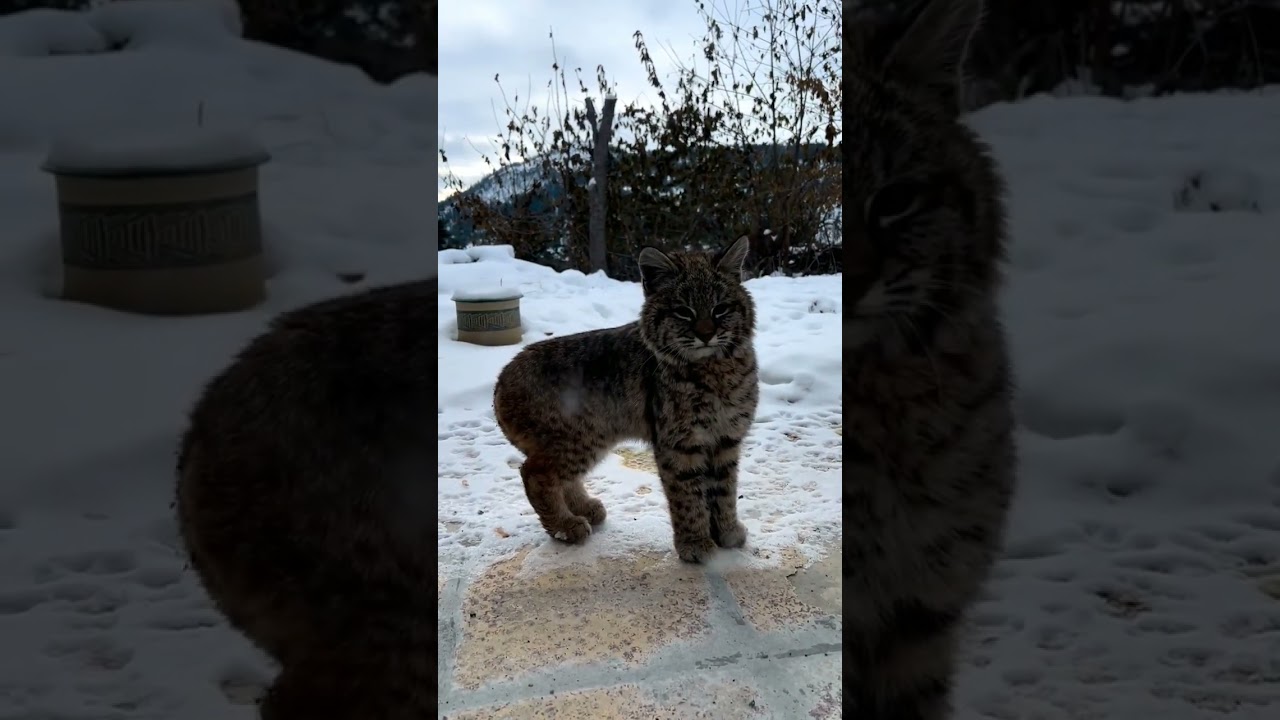
A young bobcat stands in the snow a few steps from the window, legs planted, face turned square to the lens. It has crossed the yard to the window on its own, in daylight, and now it simply looks back.
The filmer calls it young and fluffy. Bobcats wear buff to brown fur, sometimes with a reddish tinge, spotted and striped with brown and black over lighter undersides. Add short ear tufts, ruffs of hair at the sides of the head that read as sideburns, and a bobbed tail tipped in black, and the identification is settled.
Daylight is the odd part. Where people live, bobcats typically keep their activity to the night hours, and studies find the species busiest at dawn and dusk. In dim light a bobcat sees up to six times better than a human. A cat strolling up to a house by day has set aside one of its best advantages.
Its age puts the visit on a calendar. Bobcat kittens are typically born in spring, and the young disperse during the winter at about eight months old. A young cat alone in the snow fits that calendar, though nothing in the clip shows whether this one has already left its mother. Males take no part in raising the young, so a kitten's care comes from its mother alone.
Snow is hard country for this species. Lynx have longer legs and densely furred footpads built for deep drifts. Bobcats have relatively small feet with bare pads, and snow greatly reduces their mobility and their ability to catch prey, which is mostly rabbits and hares. Bobcats turn up less often where winter snow lies deep.
The species is solitary, with males and females meeting almost only in the mating season. This one has instead stood face to face with a household in daylight, an odd meeting for a cat so elusive and wary of people that it is seldom seen.