Elk field guide
Field Guide
| Common name | Elk |
|---|---|
| Scientific name | Cervus canadensis |
| Family | Cervidae (Deer family) |
| Size | Bulls about 5 feet at the shoulder and about 8 feet nose to tail; cows about 4 1/2 feet tall and about 6 feet long.National Park Service · Animal Diversity Web, University of Michigan |
| Weight | Large bulls can weigh 700-1000 pounds (up to 1,100 in the rut); cows around 300-500 pounds. Calves about 30 pounds at birth.National Park Service · National Park Service · Animal Diversity Web, University of Michigan |
| Lifespan | 10-13 years in the wild; Yellowstone's northern range elk regularly live to about 18 years.National Park Service · National Park Service |
| Diet | Grasses, sedges, forbs and shrubs (especially willow and serviceberry); in winter, shrubs, aspen bark and conifers. About 20 pounds of vegetation a day.Montana Natural Heritage Program and Montana Fish, Wildlife & Parks · National Park Service · National Park Service · Washington Department of Fish and Wildlife |
| Active when | Feeds in the early morning and late evening; rests and chews cud during the day and the middle of the night.Animal Diversity Web, University of Michigan |
| Range | Western North America (Rocky Mountains to the Pacific coast and western Canada), with reintroduced herds in the East such as Great Smoky Mountains National Park.Animal Diversity Web, University of Michigan · Washington Department of Fish and Wildlife · National Park Service |
| Conservation status | IUCN Red List: Least Concern. NatureServe: G4 (Apparently Secure); N5 in Canada, N4 in the US.NatureServe Explorer |
Field Marks
- Buff-colored rump patch, yellowish to almost orange, contrasting with a brown body; head, neck and legs are darker than the rest of the body.Washington Department of Fish and Wildlife · Montana Natural Heritage Program and Montana Fish, Wildlife & Parks
- Coat is light brown in winter and reddish tan in summer.Washington Department of Fish and Wildlife
- Both sexes have a dark brown mane; in winter it hangs shaggy from the neck to the chest, and it is longer on bulls than on cows.National Park Service · Washington Department of Fish and Wildlife · Montana Natural Heritage Program and Montana Fish, Wildlife & Parks
- Antlers grow on bulls, very occasionally on cows; a mature bull's generally have five tines off the main branch, for a total of six points.Montana Natural Heritage Program and Montana Fish, Wildlife & Parks · National Park Service
- When a rich diet softens them into a mass, elk droppings average 4 to 6 inches across; deer droppings run about 2 inches across.Washington Department of Fish and Wildlife
Habitat
- Mainly coniferous forest broken by openings: mountain meadows, grasslands, burns and logged areas.Montana Natural Heritage Program and Montana Fish, Wildlife & Parks
- Ideal habitat is productive grassland, meadow or clearcut interspersed with closed-canopy forest.Washington Department of Fish and Wildlife
- Typically found from sea level to 3,000 m, sometimes higher, in open woodlands, coniferous swamps, clearcuts and aspen-hardwood forest.Animal Diversity Web, University of Michigan
- Moist sites are preferred in summer; in western Montana elk usually move down to grass or shrub winter ranges with nearby trees for cover.Montana Natural Heritage Program and Montana Fish, Wildlife & Parks
- Rocky Mountain elk year-round ranges cover 2,500 to 10,000 acres, usually with distinct summer and winter areas.Washington Department of Fish and Wildlife
Behavior
- The rut generally runs from early September to mid-October; elk breed in late September and early October.National Park Service · Montana Natural Heritage Program and Montana Fish, Wildlife & Parks
- Bulls bugle to advertise status and attract cows: a guttural groan that rises to a high-pitched whistle and often ends in low grunts.Washington Department of Fish and Wildlife · Animal Diversity Web, University of Michigan
- Elk are called the noisiest of all deer: calves bleat and squeal, cows bark, grunt and squeal.Animal Diversity Web, University of Michigan
- Bulls gather harems that range from 3 or 4 cows to as many as 20 to 25 cows.Washington Department of Fish and Wildlife
- Prime breeding bulls are eight to nine years old.National Park Service
- Summer herds can hold up to 400 elk, are matriarchal, and old cows usually lead them.Animal Diversity Web, University of Michigan · Montana Natural Heritage Program and Montana Fish, Wildlife & Parks
- Herds move to higher elevations in summer and down to lower elevations in winter; some populations do not migrate.National Park Service · Montana Natural Heritage Program and Montana Fish, Wildlife & Parks
- Antlers can grow up to an inch a day under velvet in spring and summer, and a mature bull's can weigh up to 40 pounds.National Park Service · Washington Department of Fish and Wildlife
- In late summer the velvet dries and is rubbed off; Yellowstone bulls usually start scraping it around early August, and by September the antlers are solid bone.National Park Service · National Park Service · Washington Department of Fish and Wildlife · Rocky Mountain Elk Foundation
- Bulls shed antlers from late February (largest males) through April or early May (younger bulls).Washington Department of Fish and Wildlife
- Gestation lasts 240 to 262 days; a single spotted calf is born from late May into June, and twins are rare.Animal Diversity Web, University of Michigan · National Park Service
- Calves can join the herd after two weeks and are weaned at about two months.National Park Service
- Predators include mountain lions, gray wolves and bears; bobcats and coyotes take calves.Animal Diversity Web, University of Michigan
- Elk are about 85% of winter wolf kills in Yellowstone and feed at least 12 scavenger species.National Park Service
Winter
- Winter coats are made of hollow hairs that trap air for insulation.National Park Service
- Elk can plow through deep snow and migrate from higher to lower elevations for winter.National Park Service
- In fall elk shift to browsing shrub and tree sprouts, eating conifers as a last resort when snow covers other plants.Washington Department of Fish and Wildlife
- In Yellowstone, 10,000 to 20,000 elk summer in the park but fewer than 2,000 stay there for winter.National Park Service
Questions
How big is an elk?
Large bulls can weigh 700-1000 pounds and stand five feet at the shoulder; cows weigh around 300-500 pounds. A typical healthy bull's antlers are 55-60 inches long and weigh about 30 pounds a pair.National Park Service · National Park Service
Are elk dangerous to people?
Yes, especially at two times of year: bulls in the rut will charge people and vehicles, and cows with calves may run at you or kick. Jasper warns elk can attack without warning in any season.National Park Service · National Park Service · Parks Canada
How close can I get to an elk?
Yellowstone says at least 25 yards, Rocky Mountain National Park 75 feet, and Jasper 30 metres; in the Smokies willfully approaching within 50 yards is illegal. Never get between a bull and his cows.National Park Service · National Park Service · Parks Canada · National Park Service
What should I do if an elk charges?
Get into a vehicle or behind a tree or sturdy barrier. If knocked down, get up and move away; do not play dead.National Park Service · Parks Canada
Why do elk bugle?
Bulls bugle in early fall to challenge other bulls and advertise their status to cows. The call rises to a high-pitched squeal and drops into grunts.Washington Department of Fish and Wildlife · Animal Diversity Web, University of Michigan · National Park Service
When do elk drop their antlers?
The biggest bulls start shedding in late February, younger bulls as late as April or early May. New antlers grow in velvet through spring and summer.Washington Department of Fish and Wildlife
What do elk eat?
Grass is preferred where available, along with sedges, forbs and shrubs like willow. In winter they browse shrubs, aspen bark and conifers.Montana Natural Heritage Program and Montana Fish, Wildlife & Parks · National Park Service · Washington Department of Fish and Wildlife
Where do elk go in winter?
Many herds move down from high summer range to lower grass and shrub winter ranges. Some populations stay put year-round.Montana Natural Heritage Program and Montana Fish, Wildlife & Parks · National Park Service
When are elk calves born?
Calves are born from about mid-May to late June (mid-May to mid-June in Montana), weighing about 30 to 35 pounds. Calves are spotted and scentless as camouflage from predators.Montana Natural Heritage Program and Montana Fish, Wildlife & Parks · National Park Service · Washington Department of Fish and Wildlife · Rocky Mountain Elk Foundation
Are dogs a problem around elk?
An unleashed dog may make an elk aggressive because the elk sees it as a predator.Parks Canada
Clips
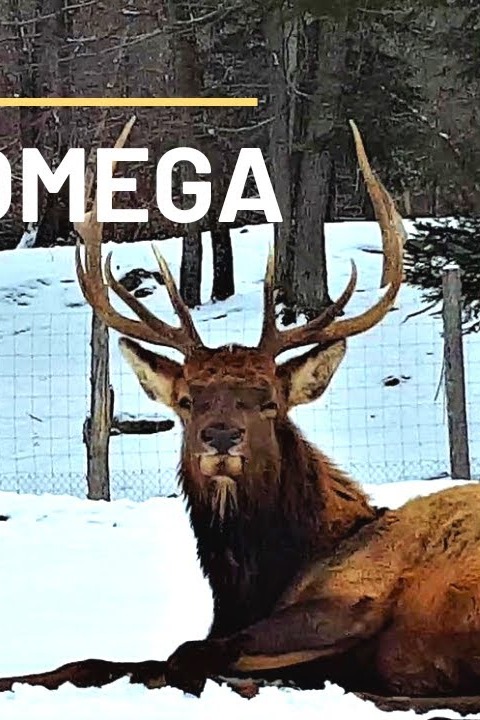 A bull elk rests in the snow, antlers high
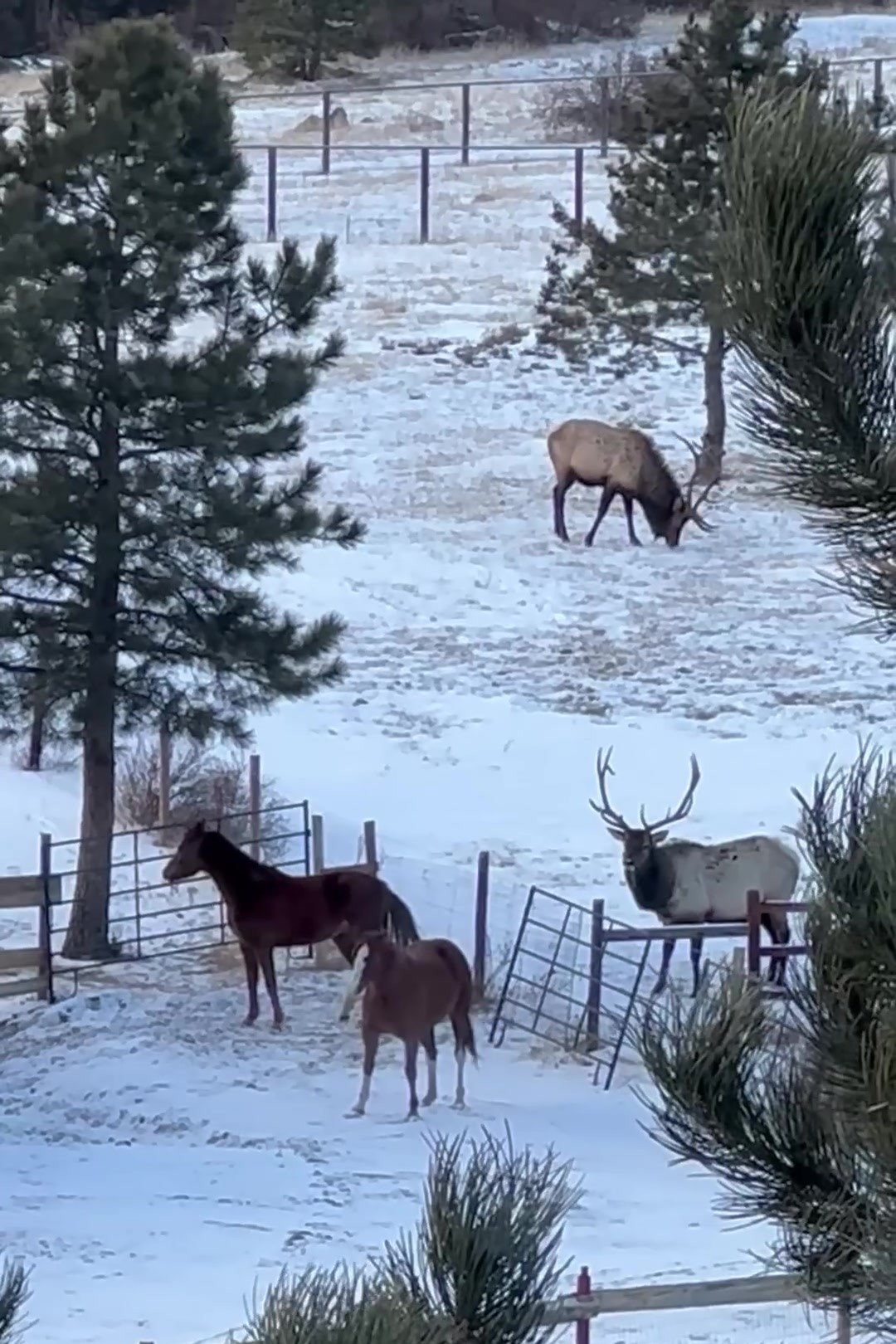 Bull elk meets two horses at a snowy fence
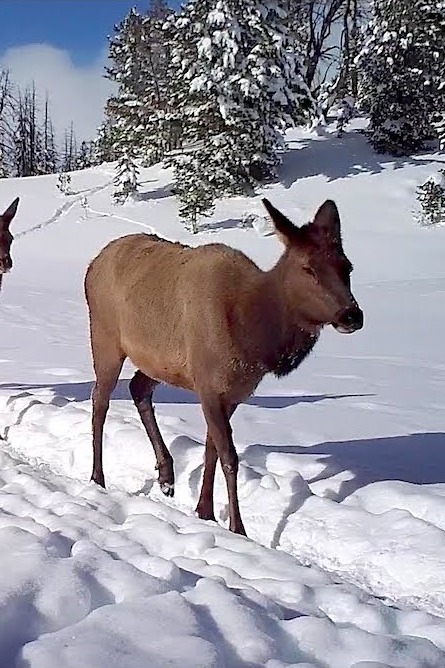 A line of elk on a snowy migration trail
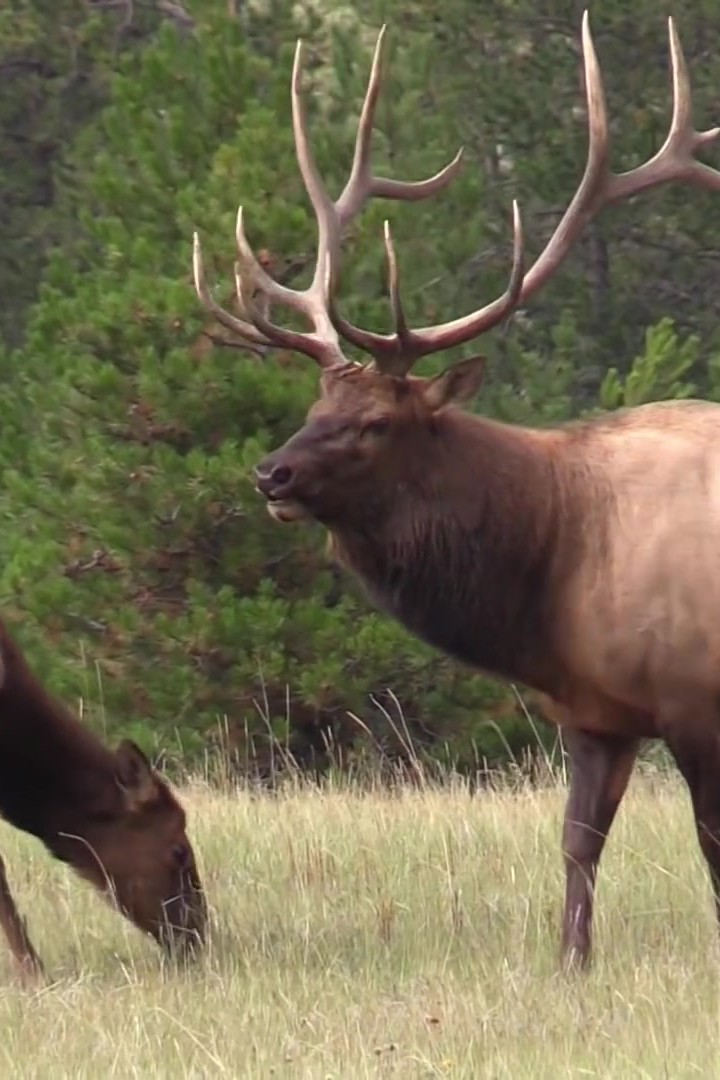 Rutting bull elk strides the meadow edge
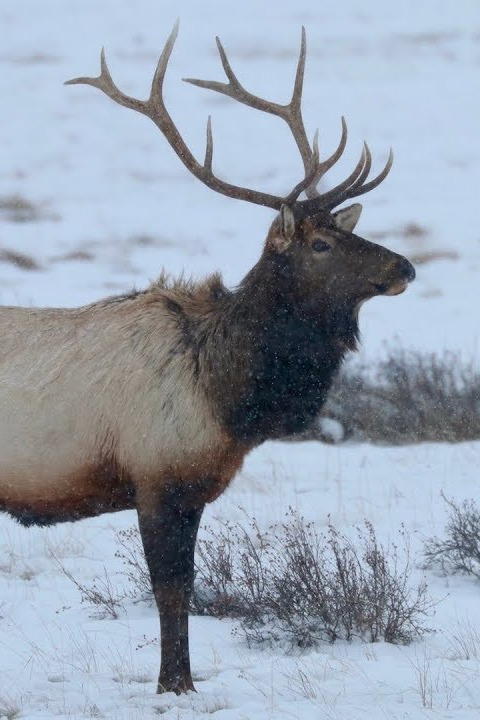 Antlered bull elk in falling Wyoming snow
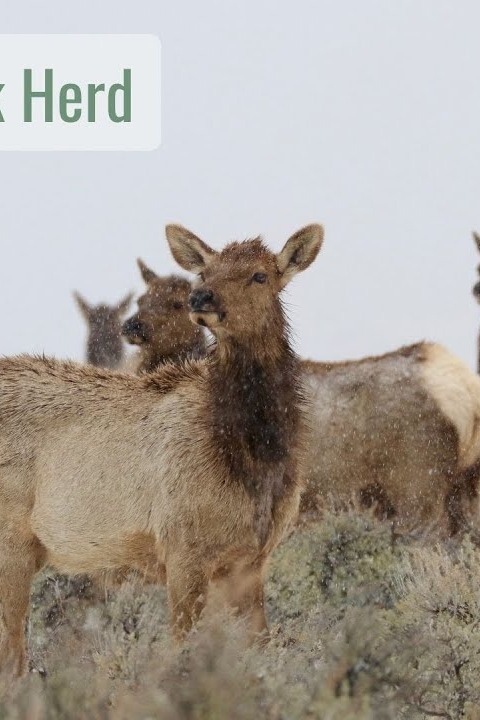 Elk herd migrating through spring snow in Wyoming
A captive bull elk lies in the snow at Parc Omega in Montebello, Quebec, resting by day with his antlers still on and his winter mane hanging shaggy.
A bull elk and two horses meet at a paddock gate in snowy Estes Park, Colorado, and one horse leans in for what looks like a kiss.
After a storm buries the high-country grass, elk file down a packed snow trail past a trail camera on a migration corridor near Yellowstone, bound for winter range about 70 miles away.
In the Canadian Rockies rut, a bull elk runs up on his grazing cows with his tongue flicking, then urinates and rakes his antlers through the dirt.
A bull elk with a tall rack stands broadside in falling Wyoming snow, in a winter look at several herds browsing open ground for grass.
Several hundred elk drift through Wyoming sagebrush in heavy spring snow while a moose slips past behind them toward the tree line.
Sources
- Cervus elaphus (elk), Animal Diversity Web, University of Michigan
- Elk - Yellowstone National Park, National Park Service
- Elk - Rocky Mountain National Park, National Park Service
- Elk (Cervus canadensis), Washington Department of Fish and Wildlife
- Elk - Cervus canadensis (Montana Field Guide), Montana Natural Heritage Program and Montana Fish, Wildlife & Parks
- Cervus canadensis - Elk, NatureServe Explorer
- DANGER: Elk calving season begins soon; Be aware of your surroundings!, National Park Service
- Elk safety - Jasper National Park, Parks Canada
- Elk rutting season underway in Great Smoky Mountains National Park, National Park Service
- Winter Wanderings - Glacier National Park, National Park Service
- Elk Facts, Rocky Mountain Elk Foundation