The Story
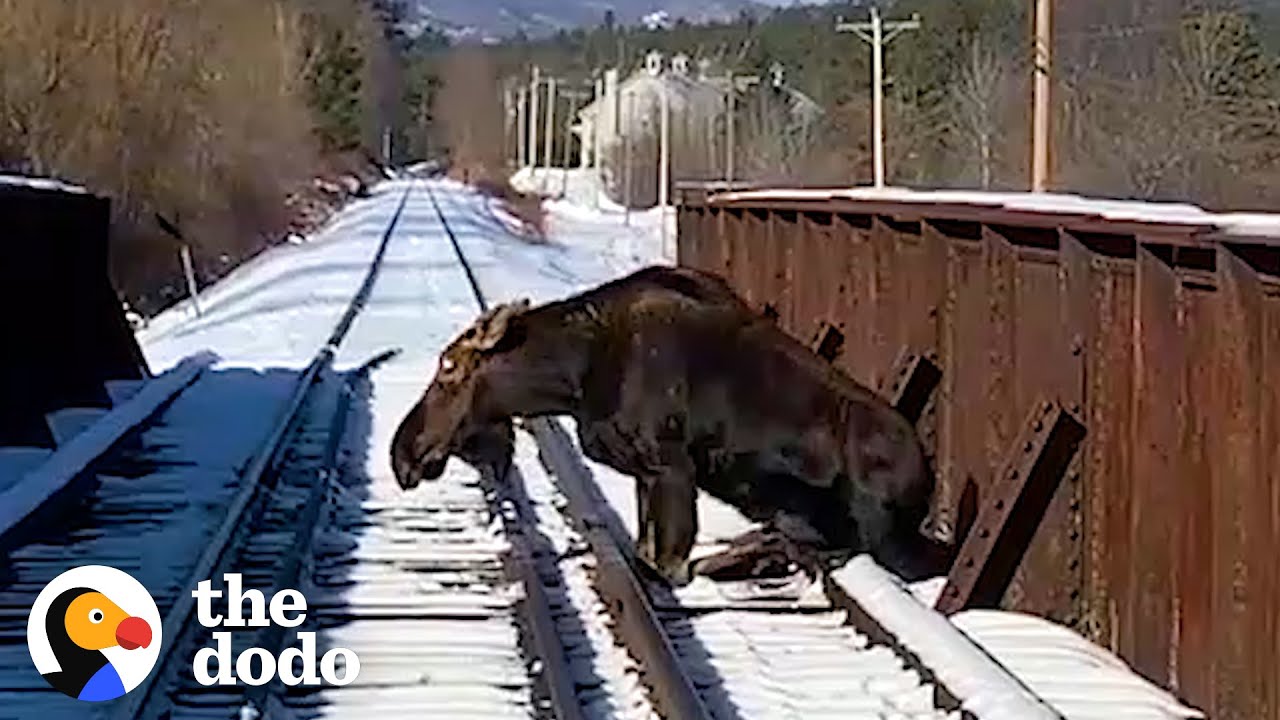
Her front legs stand on the ties, her hindquarters have dropped down into the track, and a 700-pound cow moose is going nowhere on a snowy Vermont rail line. Beside her a rusted steel girder runs along the rails.
This is a big, powerful animal, and a trapped one wants no people near it. The two main worries are plain: a person gets hurt, or she injures herself during the rescue. Moose usually flee, and yet more people in Alaska are injured by moose than by bears in a year. A harassed moose can turn aggressive. This one has no way to flee.
She is bareheaded, which proves little in a snow scene, because bulls drop their antlers in late fall or early winter. The face is the better mark. A cow has a brown face on a dark body, and a bull's face is black. Long legs let a moose paw through deep snow to reach food. Down in the track they are no help.
So the biologists sedate her, and the problem turns from danger into weight. Alaska's scale starts at 800 pounds for a small adult cow and runs to 1,600 for a large bull, so by Alaskan measure 700 is a modest moose. It is still far too much for a few people to raise off a rail line. The railroad company brings a truck to lift her out of danger, the local fire department comes to help, and the agency says plainly it could not have been done without them.
They take her only a short way, since animals should not be moved far. Then everyone waits for her to come round, and for proof she can stand and walk. The agency is frank that interventions like this often fail. A wild animal is scared of people, and its struggle to get away from them can do it harm.
This time it holds. She gets up and goes off under her own steam, which on a railroad seems only fair.