Moose field guide
Field Guide
| Common name | Moose |
|---|---|
| Scientific name | Alces alces |
| Family | Cervidae (Deer family) |
| Size | Adults stand on average 5 to 7 feet at the shoulder; total length about 9 feet (Maine).National Park Service · Maine Department of Inland Fisheries and Wildlife · Animal Diversity Web, University of Michigan |
| Weight | 800 lb (small adult female) to 1,600 lb (large adult male).Alaska Department of Fish and Game · Animal Diversity Web, University of Michigan |
| Lifespan | Rarely more than 16 years in the wild; one cow lived to 22.Alaska Department of Fish and Game · Animal Diversity Web, University of Michigan |
| Diet | Browser: leaves and shoots in summer, twigs of willow, birch and aspen in fall and winter, plus aquatic plants. Up to 70 lb of food a day.Animal Diversity Web, University of Michigan · Alaska Department of Fish and Game · National Park Service |
| Active when | Crepuscular: most active at dawn and dusk.Animal Diversity Web, University of Michigan · Maine Department of Inland Fisheries and Wildlife |
| Range | Much of Alaska and Canada, the northern edge of the contiguous US, and south along the Rocky Mountains to Utah and Colorado.Animal Diversity Web, University of Michigan |
| Conservation status | IUCN Red List: Least Concern. NatureServe: G5; N5 in US and Canada.Animal Diversity Web, University of Michigan · NatureServe Explorer |
Field Marks
- Largest member of the deer family; mature moose have a front shoulder hump and a flap of skin hanging below the throat called a bell.Minnesota Department of Natural Resources
- Long, bulbous, drooping muzzle; coat generally dark, black to brown or grayish brown.Animal Diversity Web, University of Michigan
- A cow has a brown face and dark body; a bull has a black face.Maine Department of Inland Fisheries and Wildlife
- A cow's bell looks more like a tuft of hair; a bull's bell is larger and rounder.Maine Department of Inland Fisheries and Wildlife
- Bulls grow large palmate antlers that can reach five feet across. NPS gives up to 77 pounds and Animal Diversity Web up to 35 kg for North American moose; Minnesota DNR gives up to 40 pounds.National Park Service · Animal Diversity Web, University of Michigan · Minnesota Department of Natural Resources
- Newborn calves have a reddish brown coat with no spots.National Park Service
Habitat
- Lives in taiga and temperate forest, including boreal, broadleaf and mixed coniferous-deciduous forest, up into the tundra-subalpine zone.Animal Diversity Web, University of Michigan
- In Rocky Mountain National Park, look for moose in areas with aquatic vegetation and willows; they use riparian (river) areas and lakes.National Park Service
- In northeastern Minnesota, the best moose habitat is young forest created by logging, forest fires and windstorms.Minnesota Department of Natural Resources
- In Maine's regularly harvested northern forestlands, regenerating forest supplies young trees and shrubs for woody browse in winter and leaves in the growing season; forest cover gives summer shade for bedding.Maine Department of Inland Fisheries and Wildlife
- Natural salt licks are rare in Maine, so moose there are often seen along roads, using salt runoff as an artificial salt lick.Maine Department of Inland Fisheries and Wildlife
Behavior
- The least social deer species: fairly solitary except during the mating season, and not territorial.Animal Diversity Web, University of Michigan
- An adult needs about 20 kg of food per day.Animal Diversity Web, University of Michigan
- Moose can dive to the bottom of shallow ponds and lakes to rip up bottom-growing plants, and can easily swim 10 miles without stopping.Minnesota Department of Natural Resources
- Aquatic plants such as pondweed and water lily carry more sodium than woody plants and are an important part of the diet.Maine Department of Inland Fisheries and Wildlife
- Moose can run 35 miles per hour.National Park Service · Minnesota Department of Natural Resources
- Minnesota DNR puts the rut from mid-September to mid-October; bulls spar with their antlers.Minnesota Department of Natural Resources · National Park Service
- A cow in estrus gives a long, quavering moan that can be heard up to 3.2 km away; bulls grunt to court cows or challenge other bulls.Animal Diversity Web, University of Michigan
- Bulls splash their antlers with urine, a scent that entices cows to breed.Maine Department of Inland Fisheries and Wildlife
- Minnesota DNR says antlers begin growing in April and are usually shed in December and January; growing antlers are covered with velvety skin.Minnesota Department of Natural Resources · National Park Service
- Antler can grow as much as 8 inches in nine days; the velvet sheds as testosterone surges in September.Maine Department of Inland Fisheries and Wildlife
- Gestation is about 230 days; one calf on average, twins common. In Denali, calving runs late May through early June.Alaska Department of Fish and Game · National Park Service · Animal Diversity Web, University of Michigan
- A calf weighs about 28 pounds at birth and grows to about 10 times that size within 5 months.Alaska Department of Fish and Game
- Calves stay with the mother about a year and are driven off shortly before the next calf is born.Maine Department of Inland Fisheries and Wildlife
- Wolves, black bears and brown bears prey on moose; in Maine predation is low because predators cannot kill adults.Alaska Department of Fish and Game · Maine Department of Inland Fisheries and Wildlife
Winter
- Underfur and long guard hairs 15 to 25 cm long, which are hollow, insulate moose from cold.Animal Diversity Web, University of Michigan
- In winter moose form 'yards', paths in deep snow, and their long legs let them paw through deep snow to reach food.National Park Service
- Fall and winter food is large quantities of willow, birch and aspen twigs; balsam fir adds winter value, but moose cannot survive on it alone.Alaska Department of Fish and Game · Maine Department of Inland Fisheries and Wildlife
- Bulls drop their antlers in late fall or early winter after the rut to conserve energy for winter.National Park Service · Maine Department of Inland Fisheries and Wildlife
- Moose seek mineral licks to replenish sodium reserves depleted in the winter.National Park Service
Questions
How big is a moose?
Adults range from 800 pounds for a small cow to 1,600 pounds for a large bull and stand up to almost 6 feet tall. Total length is about 9 feet.Alaska Department of Fish and Game · Maine Department of Inland Fisheries and Wildlife
Are moose dangerous to people?
Moose usually flee, yet more people in Alaska are injured by moose than by bears yearly. They can become aggressive when harassed, when hungry and tired in deep winter snow, or as cows guarding calves; rutting bulls may be too.Alaska Department of Fish and Game
How can I tell a moose is about to charge?
Raised hairs on the hump, ears laid back, lip licking or a slow approach are warning signs. If charged, run and get behind something solid such as a tree, building or car.Alaska Department of Fish and Game
When do moose shed their antlers?
Minnesota DNR says antlers are usually shed in December and January. Bulls regrow them each spring, starting in April.Minnesota Department of Natural Resources
When is the moose rut?
Breeding runs in late September and early October. Bulls can be extremely aggressive and dangerous during the rut.Alaska Department of Fish and Game · National Park Service
What do moose eat in winter?
Large quantities of willow, birch and aspen twigs, with balsam fir adding value over the long winter though it is lower in nutrition. Moose paw through deep snow with their long legs to reach food.Alaska Department of Fish and Game · Maine Department of Inland Fisheries and Wildlife · National Park Service
Why does that moose look gray or white?
Heavy winter tick infestations make moose groom excessively and lose large sections of hair, giving a white to grayish look; these are called ghost moose. Wyoming Game and Fish says it is typically seen in calves and yearlings.Wyoming Game and Fish Department · Canadian Wildlife Health Cooperative
How many ticks can a moose carry?
Winter ticks attach by the thousands and stay on for five or six months, causing blood loss and hair loss. Larvae climb aboard in September and October, during the rut.Maine Department of Inland Fisheries and Wildlife · Canadian Wildlife Health Cooperative
Can winter ticks hurt people or pets?
Wyoming Game and Fish says the winter tick poses no human health concern. Canadian Wildlife Health Cooperative calls the risk to people and domestic animals negligible.Wyoming Game and Fish Department · Canadian Wildlife Health Cooperative
Can moose swim?
Yes, moose are excellent swimmers and can swim 10 miles without stopping. They also dive in shallow ponds to feed on bottom plants.National Park Service · Minnesota Department of Natural Resources
Clips
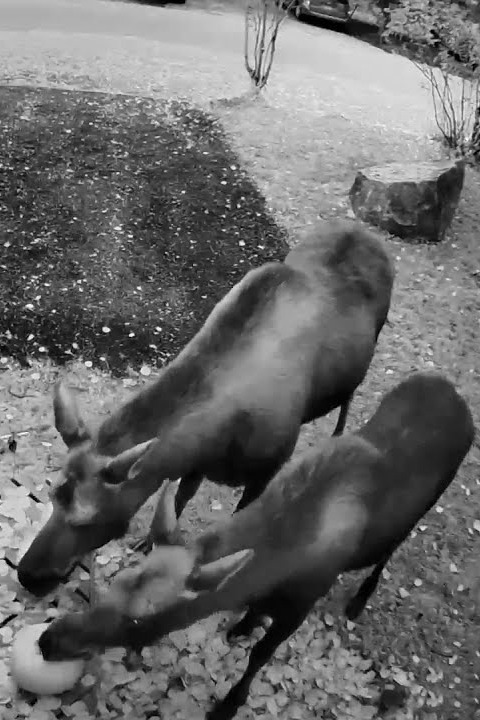 Two moose get talked out of a doorstep pumpkin
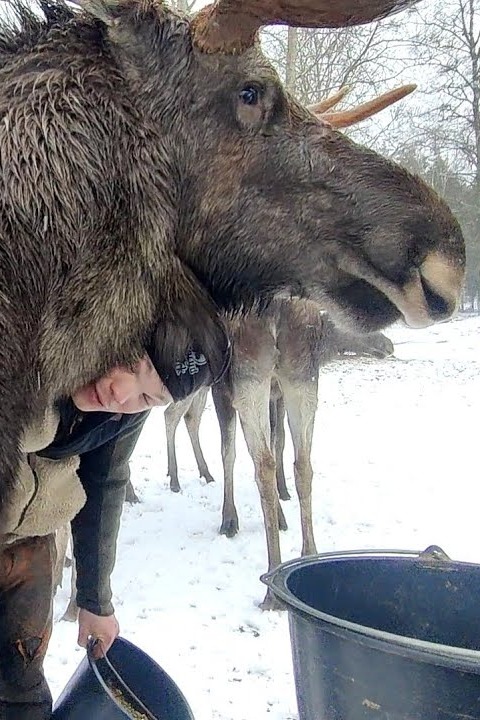 Keeper ducks under a bull moose at feeding time
 Skiing backwards ahead of a full-speed moose
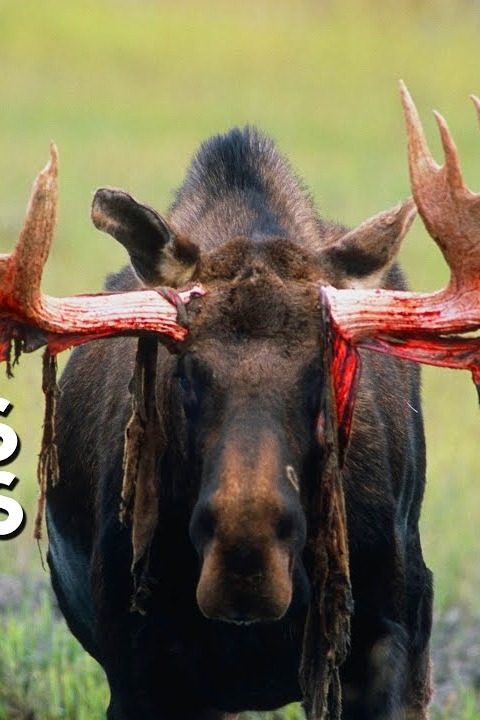 Velvet hangs in bloody strips from a bull moose
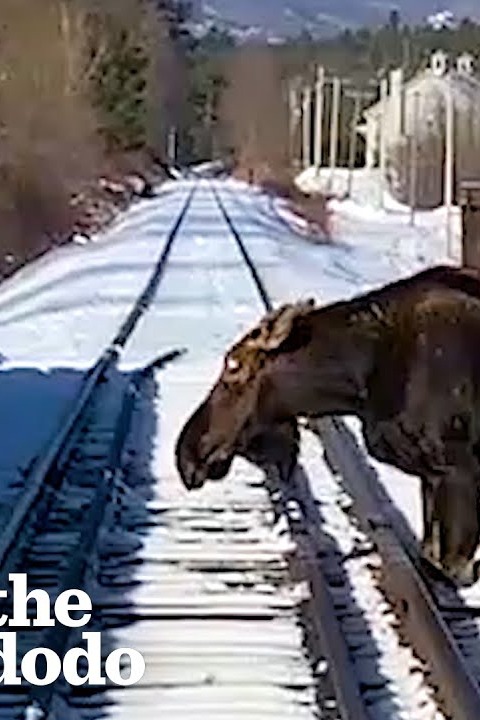 A 700-pound moose stuck fast on railroad tracks
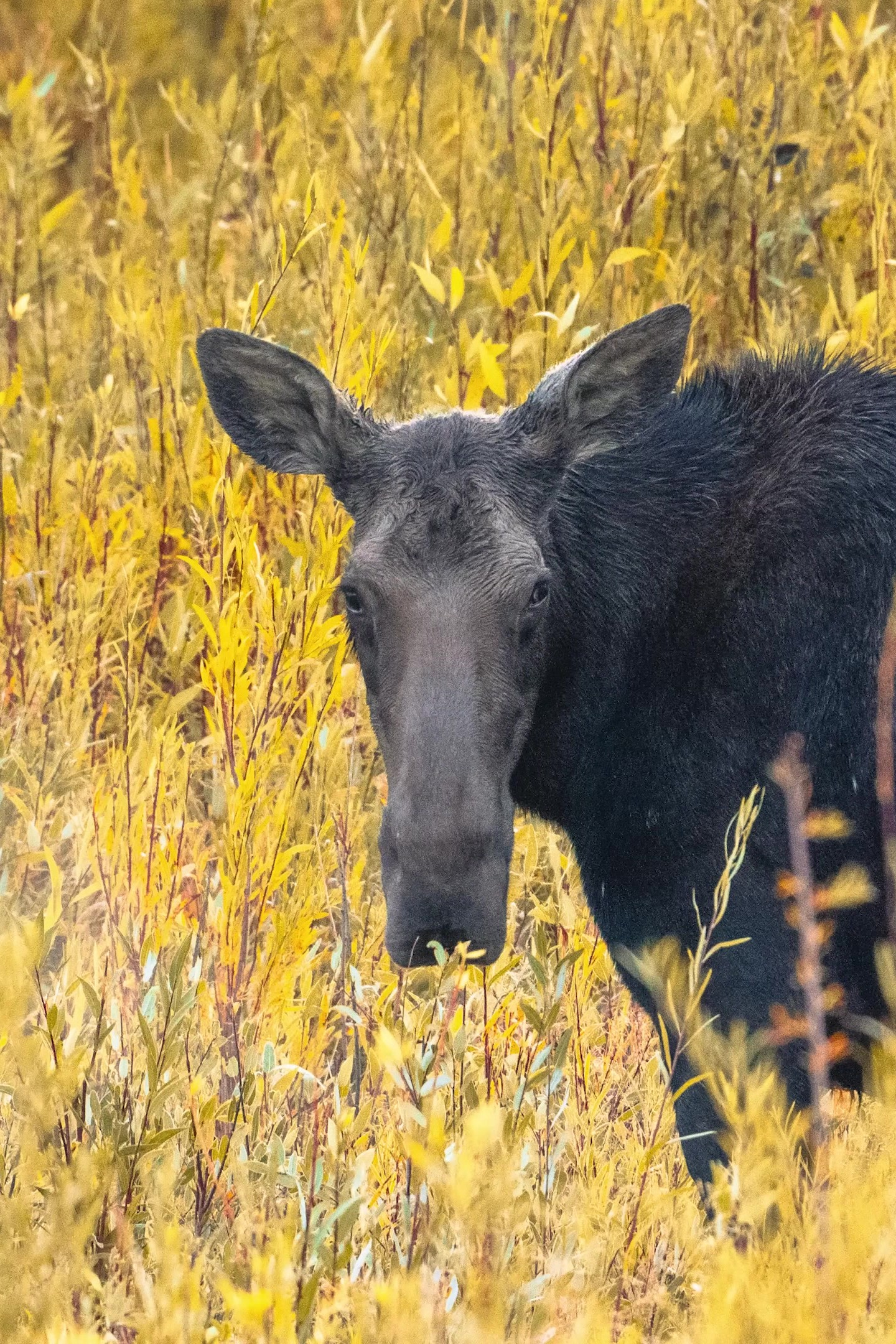 Bull moose feeds in a golden Grand Teton meadow
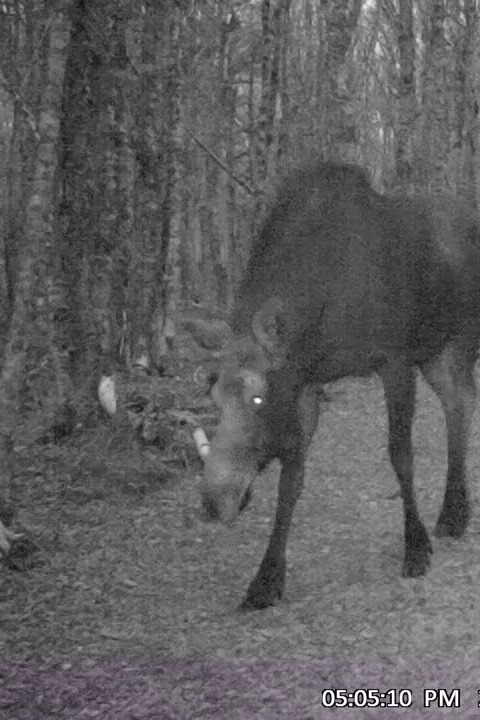 Lone moose noses along a November trail
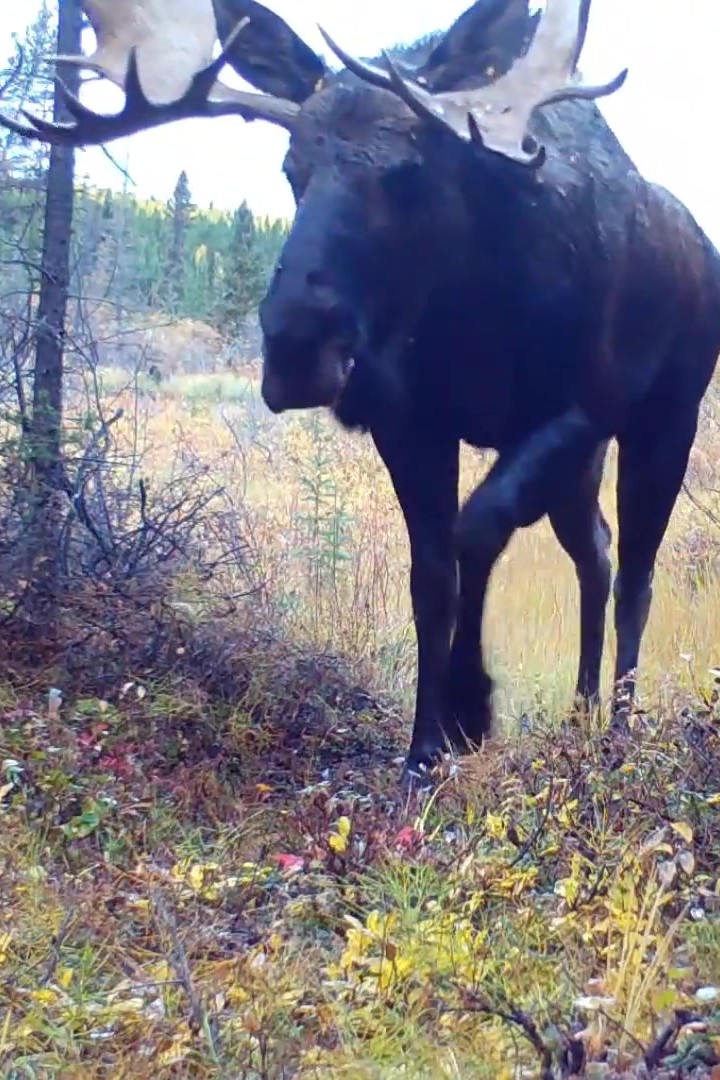 Six months of moose at a backcountry trail cam
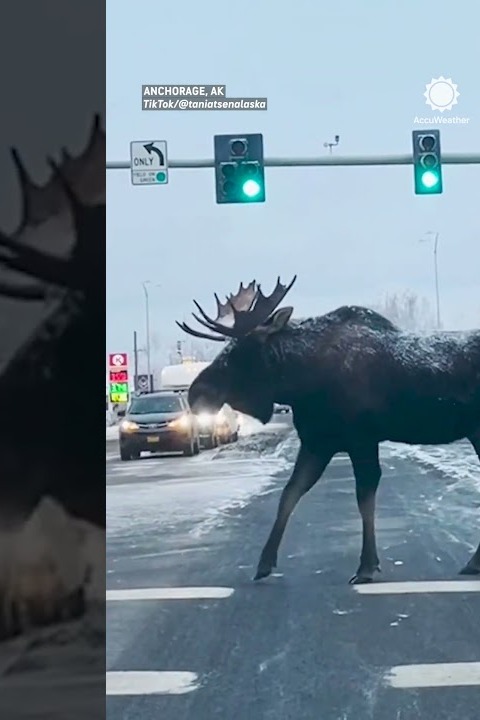 Bull moose takes the crosswalk against the light
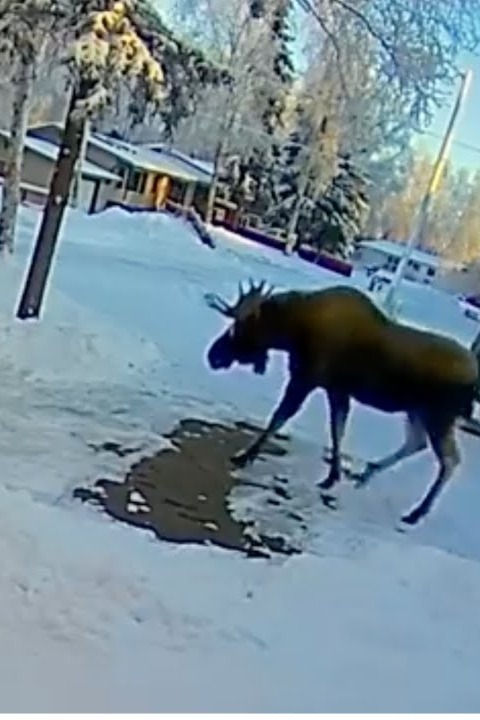 Bull moose traps an Alaska man in his shed
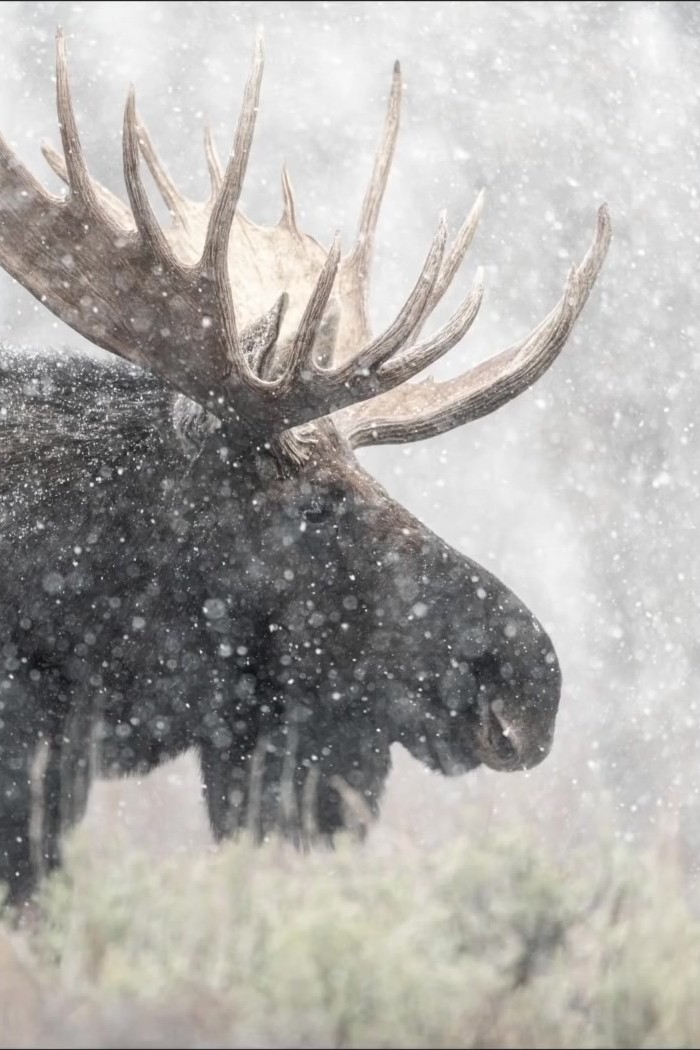 Bull moose stands in an October snowstorm
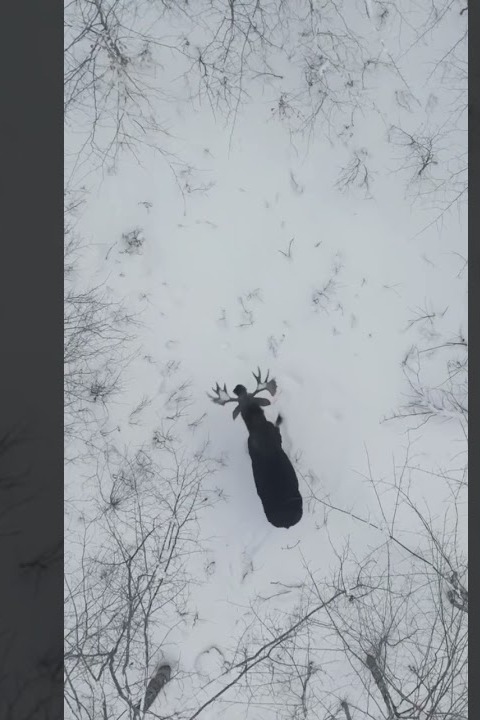 Bull moose shakes off both antlers in the snow
Two moose bend to a pumpkin at a house door until its owner, out at the grocery store, speaks to them through her security camera and they stop.
At a moose park in Sweden, a keeper feeding from buckets in the snow introduces two bulls, one with antlers and one without, a May-born calf, her yearling sister and their mother.
A moose at full speed comes down a Jackson Hole ski run toward a skier who is going backwards and filming it.
Bloody velvet peels from a bull moose's antlers, a bull shakes his rack off, and by dark moose are licking salt from a road in Jasper as the day's tally hits nine.
A 700-pound cow moose stuck in a snowy Vermont railroad track is sedated, lifted out by a railroad truck and walks off on her own.
In fall color in Grand Teton National Park, a lone bull moose feeds head down in a golden meadow below the Teton peaks.
On a leaf-covered woodland trail at five on a November afternoon, a lone moose with no antlers stands mid-stride under infrared and puts its nose to the ground.
Over six months on one backcountry trail, moose pass often enough to name the site, a calf grows visit by visit, and grizzlies, black bears, wolves and lynx share the path.
Under two green traffic lights on a snowy Alaska road, a bull moose walks the crosswalk against the signal at an unhurried pace, oncoming traffic fast, and he makes it across.
A bull moose walks up on an Alaska man taking garbage to his shed, and the man backs inside and shuts the door until the bull moves on.
In an October snowstorm in Jackson Hole, two bull moose feed about 100 yards off the road, then bed down as the snow eases.
Filmed from directly above, a lone bull moose in a snowy forest shakes loose both antlers and runs the moment they fall.
Sources
- Alces alces (moose), Animal Diversity Web, University of Michigan
- Moose (Alces alces) Species Profile, Alaska Department of Fish and Game
- Living with Moose: Aggressive Moose, Alaska Department of Fish and Game
- Moose - Rocky Mountain National Park, National Park Service
- Moose - Denali National Park & Preserve, National Park Service
- Moose (Alces alces), Minnesota Department of Natural Resources
- Moose: Species Information, Maine Department of Inland Fisheries and Wildlife
- Ghost Moose (winter tick), Wyoming Game and Fish Department
- Winter Tick fact sheet, Canadian Wildlife Health Cooperative
- Alces alces - Moose, NatureServe Explorer