The Story
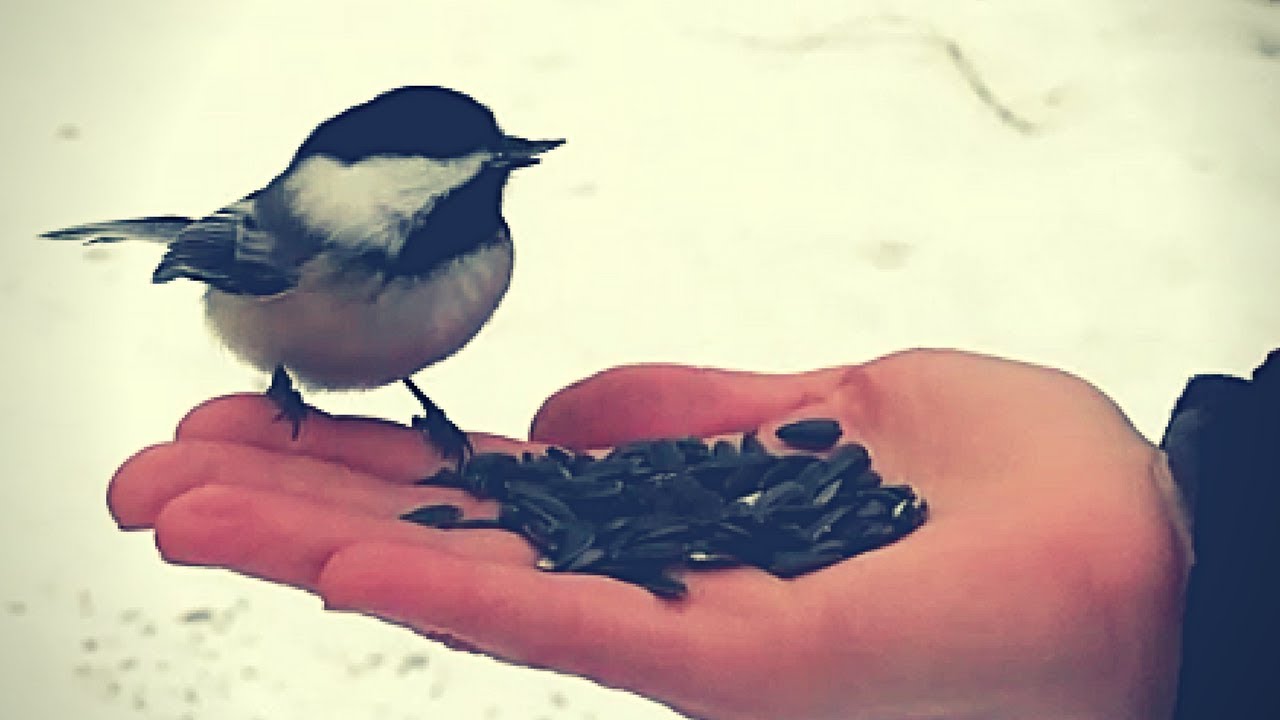
A black-capped chickadee drops onto a bare palm, grips the fingers with both feet and stands at the edge of a heap of dark seeds. Snow covers the ground behind it.
Two hikers have stopped on a winter walk to try this, and the birds answer quickly. At arm's length the field marks are plain: black cap, black bib, white cheeks, gray wings and buffy underparts fading to white on the chest. The bird weighs 9 to 14 grams.
Chickadees rank among the easiest birds to feed by hand, provided the person stands very still and lets the birds get used to them. Here they come down from the trees one at a time, as if waiting in line, and take turns at the pile. A chickadee flock can hold up to 12 birds and runs on a dominance hierarchy, with males above females.
Many visitors do not eat on the spot. A bird takes a seed and leaves for a branch, and one pins its prize between its toes there. At feeders the species may take sunflower seeds one at a time and flies off to stuff them into bark crevices, and it tests each sunflower seed for plumpness, discarding empty shells before opening them. In fall a single bird can store up to 1,000 seeds a day.
Partway through, a second kind of seed comes out, and the birds take it just as readily. Seeds and fruit may make up no more than 10 percent of a chickadee's summer diet but up to half of it in winter, and the bird eats over 35 percent of its own weight daily. On cold nights its body temperature slowly falls from 108 °F to about 86 °F, trimming the calories it needs to reach morning.
Before long her hiking partner holds out a hand of his own, and a chickadee walks across it to the seeds. It is his first time. For the chickadee it is one more perch with food on it.