The Story
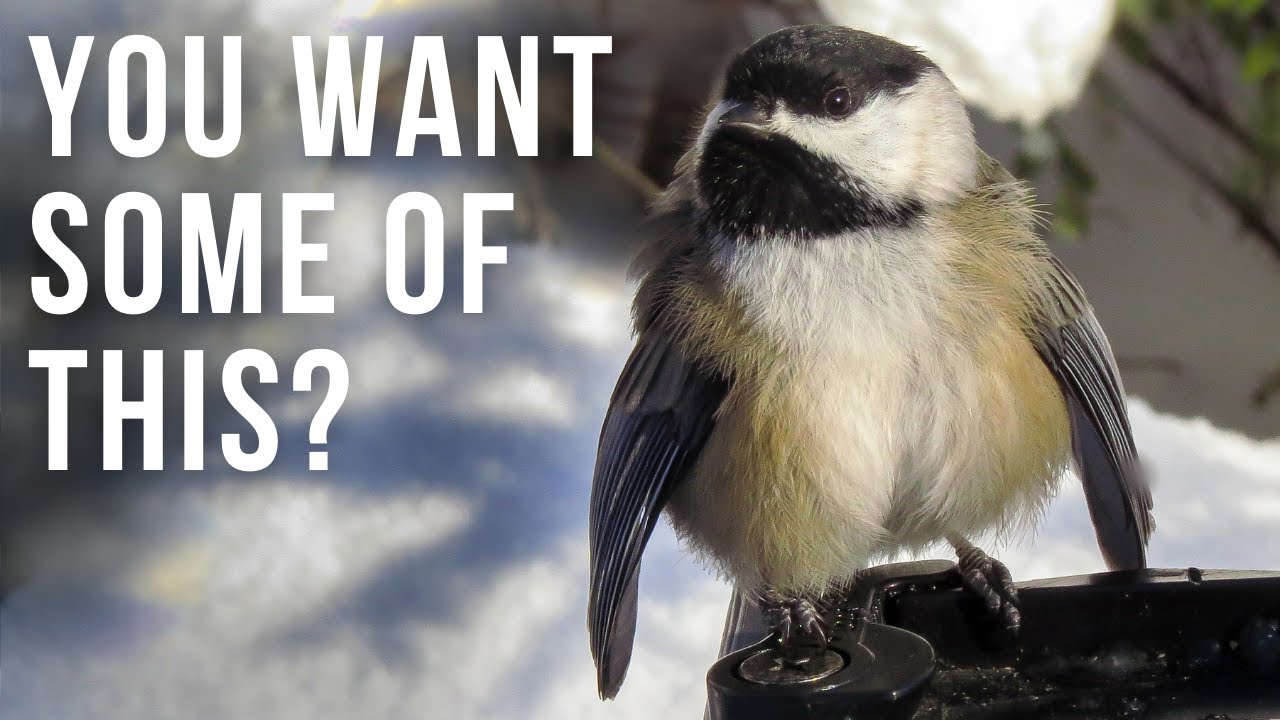
A black-capped chickadee stands on a black rim in winter sun and suddenly looks bigger than it is, breast and back feathers raised, wings held out from its sides. Another chickadee is close, and this is the reply.
The whole show lasts a second or two. At full speed it is a flicker, so the footage runs slowed down and lets each lifted feather register. Researchers call it the body ruffling display, and the filmer is firm on one point. This is not a cold bird fluffing up for warmth. The posture is different, and so is the trigger.
The field marks are easy in this light. Black cap, black bib, white cheeks, gray wings and a buff wash along the sides, all on a short plump body with a tiny pointed beak. Males and females look identical, so nothing in the plumage tells you who is bluffing whom.
What the display seems to settle is rank. Chickadee flocks run on dominance hierarchies, and males outrank females. Pairs typically form in fall and spend the winter inside the flock, the highest-ranking male and female usually paired together. Birds lower down pay for it. They tend to forage in the outermost parts of trees, where they are most exposed to predators.
The filmer has seen it many times between adults from neighboring territories, especially in fall, when both want the same food, usually seed held out by hand. Seeds matter to this bird. It tests each sunflower seed for plumpness and discards empty ones before opening them, and in fall a single chickadee can store up to 1,000 seeds a day in bark crevices and small cavities.
To the filmer it looks like a way of keeping order at a crowded food source without spending energy on an actual fight. That logic suits a bird of 9 to 14 grams that eats more than 35 percent of its weight every day. A real scuffle burns fuel. A second or two of raised feathers, on that reading, settles the question without one.