The Story
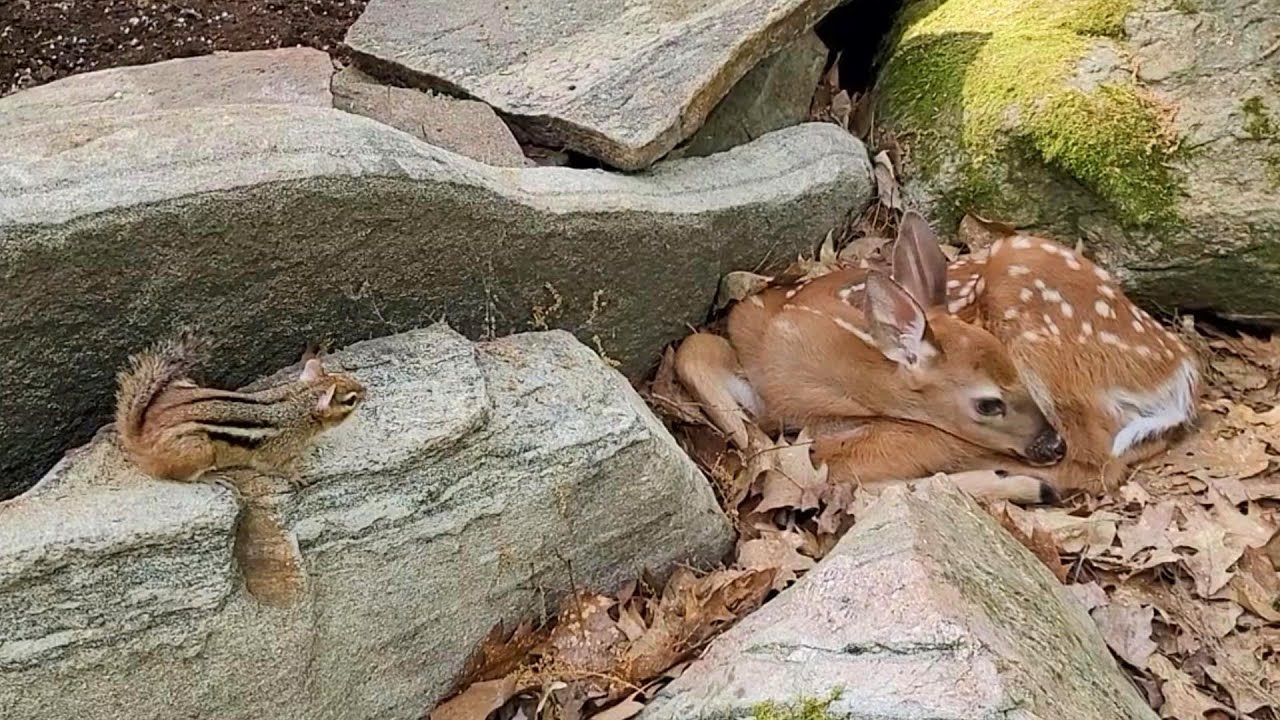
A chipmunk stops on a slab of gray rock, tail curled high, and stares. One stone over, a white-tailed deer fawn lies folded into the dead leaves with its ears up and one dark eye open, and it does not move.
No doe is in sight. The fawn is alone among the stones at the filmer's home, tucked in beside a mossy rock with its nose down by one black hoof. A small animal this still, this much by itself, looks like a problem. Anyone finding it would wonder whether it is hurt.
It is keeping an appointment. A white-tailed doe leaves her fawns hidden and visits only three or four times a day, for about 15 minutes each, a routine that diverts predators' attention. Between visits a fawn stays down for up to four hours, until she returns. A fawn can lie flat with its neck outstretched. This one holds a tight curl. Its white spots put a ceiling on its age, since fawns lose them at three to four months.
The chipmunk is not the only visitor. A person comes close too, with water on offer, and the fawn still stays put. Then it goes. It breaks from the leaves and runs, and the legs that stayed folded all this time turn out to work fine. Fawns can walk at birth, so the stillness was never about the legs.
The missing mother closes the story. A doe calls a hidden fawn with a soft mewing sound, and the basic social unit of the species is exactly this, a doe and her fawns. The fawn ends up at her side, the two of them walking off together. About a month later, by the filmer's account, the pair come back to the same place. The chipmunk's opinion goes unrecorded.