White-tailed deer field guide
Field Guide
| Common name | White-tailed deer |
|---|---|
| Scientific name | Odocoileus virginianus |
| Family | Cervidae (Deer) |
| Size | Head and body 150 to 200 cm, tail 10 to 28 cm; 80 to 100 cm at the shoulder.Animal Diversity Web, University of Michigan |
| Weight | 57 to 137 kg (125.55 to 301.76 lb). Missouri: females 110-145 lb, males 155-195 lb.Animal Diversity Web, University of Michigan · Missouri Department of Conservation |
| Lifespan | Most live about 2 to 3 years; maximum in the wild 20 years, but few live past 10.Animal Diversity Web, University of Michigan |
| Diet | Herbivore: leaves, twigs, fruits and nuts of trees and shrubs, herbaceous plants, grasses, crops, and occasionally fungi, mosses and lichens.Missouri Department of Conservation |
| Active when | Crepuscular: typically most active around dawn and dusk; activity may increase throughout the day during the breeding season.Maine Department of Inland Fisheries and Wildlife |
| Range | Most of southern Canada and the United States (except most of California, Nevada and Utah), south through Central America to Bolivia.Animal Diversity Web, University of Michigan · Connecticut Department of Energy & Environmental Protection |
| Conservation status | IUCN Red List: Least Concern (via NatureServe Explorer); NatureServe global rank G5.NatureServe Explorer |
Field Marks
- Tail is brown above and white underneath; raised high as a white "flag" when the deer is alarmed and bounds off.Connecticut Department of Energy & Environmental Protection
- White band behind the nose, white rings around the eyes, white inside the ears, on chin and throat, and on the upper insides of the legs.Animal Diversity Web, University of Michigan
- Summer coat reddish-brown to tan with short thin hairs; winter coat grayish-brown to gray with long thick hairs.Connecticut Department of Energy & Environmental Protection
- Adult males carry spreading, branching antlers; younger males may have antlers with a single point or tine.Connecticut Department of Energy & Environmental Protection · National Park Service, Chattahoochee River National Recreation Area
- Tracks are heart-shaped and pointed, 2 1/2 to 4 inches long, split down the middle; when running, dewclaws may leave dots behind each track, especially when bounding on mud or snow.Missouri Department of Conservation
- Fawns are reddish-brown with white spots, lost at three to four months of age.Connecticut Department of Energy & Environmental Protection
Habitat
- Lives in many terrestrial habitats, from the big woods of northern Maine to Florida swamps, farmland, brushy areas and southern Texas thornbrush deserts.Animal Diversity Web, University of Michigan
- Ideal habitat has dense thickets for hiding and edges that supply food.Animal Diversity Web, University of Michigan
- Deer are sometimes called an "edge" species: they thrive where openings meet cover, feeding in openings close to escape cover.Washington Department of Fish and Wildlife
- In Connecticut: field and forest edges and woodlands with an understory of herbaceous vegetation; has adapted to manicured suburban environments.Connecticut Department of Energy & Environmental Protection
- Beds in dense cover or tall grasses and may return to the same spot over many days; a bed is flattened vegetation 3 to 4 feet long.Washington Department of Fish and Wildlife
Behavior
- Feeds mainly from before dawn until several hours after, and again from late afternoon until dusk.Animal Diversity Web, University of Michigan
- A ruminant: eats rapidly, stores food in the rumen, then regurgitates and re-chews it before passing it through further stomachs.Washington Department of Fish and Wildlife
- Diet shifts with the seasons: green plants in spring and summer, acorns, corn and other nuts in fall, bark, buds and twigs in winter.Oklahoma Department of Wildlife Conservation
- The basic social unit is a doe and her fawns; bucks may form groups of 2-4 in summer that break up before the mating season.Animal Diversity Web, University of Michigan
- The alarm whistle, "snort" or "blow," is made by exhaling forcefully through the nostrils and warns all deer nearby of a possible predator.Washington Department of Fish and Wildlife
- Does call hidden fawns with a soft mewing sound; bucks grunt during the rut; older fawns commonly bleat when frightened.Washington Department of Fish and Wildlife
- Injured deer give a loud "blatt" or bawl; whistles or snorts are the most commonly heard deer sounds.Animal Diversity Web, University of Michigan
- The erected white tail flashes a danger signal to other deer nearby; fleeing deer wave their tails side to side.Maine Department of Inland Fisheries and Wildlife · Animal Diversity Web, University of Michigan
- Mating runs from late October through early January in Connecticut, peaking in the last two weeks of November; Missouri's peak is mid-November.Connecticut Department of Energy & Environmental Protection · Missouri Department of Conservation
- Does in estrus are receptive for about 24 hours; if not bred, they come into heat again every 28 days until early winter.Maine Department of Inland Fisheries and Wildlife
- Rival bucks fight by clashing antlers for access to a doe; they do not guard harems.Animal Diversity Web, University of Michigan
- Before and during the breeding season bucks rub antlers on trees and paw scrapes under a "licking branch," leaving gland secretions to communicate.Missouri Department of Conservation
- Antlers grow from April or May covered in velvet, harden by fall, and are shed from mid-December to late January in Connecticut; in Missouri they are shed mostly in February and March.Connecticut Department of Energy & Environmental Protection · Missouri Department of Conservation
- Can bound at up to 30 miles per hour through tangled forest and is a good swimmer, entering streams and lakes to escape predators or insects.Animal Diversity Web, University of Michigan
- Fawns can walk at birth; the doe leaves them hidden in dense vegetation, where they lie flat with necks outstretched for up to four hours until she returns.Animal Diversity Web, University of Michigan · Oklahoma Department of Wildlife Conservation
Winter
- In September deer molt into a coat of dense woolly underfur under long hollow guard hairs, which can be erected for extra insulation.Maine Department of Inland Fisheries and Wildlife
- In autumn deer store fat under the skin, in the viscera, between muscles and in the hollow leg bones; by late fall it can make up 10 to 25% of body weight.Maine Department of Inland Fisheries and Wildlife
- In Maine, deer wintering cover is primarily closed-canopy softwood stands of cedar, hemlock, fir and spruce; it intercepts snow, lowering snow depth and easing travel, and is typically used only when snow is most restrictive.Maine Department of Inland Fisheries and Wildlife
- In Maine, deer that migrate to winter cover typically do so between mid-November and January and remain until March or April; not all deer migrate. Metabolism slows over winter.Maine Department of Inland Fisheries and Wildlife
Questions
How big is a white-tailed deer?
Head and body length is 150 to 200 cm and shoulder height 80 to 100 cm. Adults weigh 57 to 137 kg, and males are larger than females.Animal Diversity Web, University of Michigan
Why does a deer lift its white tail?
The raised tail shows its white underside as a "flag" when the deer is alarmed. The white flash is a danger signal to other deer nearby.Connecticut Department of Energy & Environmental Protection · Maine Department of Inland Fisheries and Wildlife
What is the loud snort or whoosh a deer makes?
It is the alarm "snort" or "blow," made by forcing air out through the nostrils. It warns every deer in the area of a possible predator.Washington Department of Fish and Wildlife
When is the rut?
Breeding runs from about October to January, with peak activity in mid-November in New York, Maine and Missouri. Bucks rub trees, make scrapes and fight with their antlers.National Park Service · Maine Department of Inland Fisheries and Wildlife · Missouri Department of Conservation
When do bucks drop their antlers?
Antlers are shed from late December to early March in Maine, and mostly in February and March in Missouri. In both states new antlers begin growing in April.Maine Department of Inland Fisheries and Wildlife · Missouri Department of Conservation
Is a fawn alone abandoned?
Often the doe is nearby: she visits her fawns only three or four times a day, for about 15 minutes each, to divert predators' attention. Removing a healthy fawn from the wild is illegal and lowers its chance of survival.Connecticut Department of Energy & Environmental Protection
Are deer dangerous to people?
At Fire Island National Seashore the National Park Service advises keeping a safe distance to protect yourself from harm and never feeding deer, because food-conditioning can lead to potentially unsafe human-deer interactions. Deer-vehicle collisions often seriously injure people.National Park Service · Animal Diversity Web, University of Michigan
Where do deer sleep?
In dense cover or tall grass, often returning to the same spot over many days. In winter, beds show as deer-sized depressions in the snow littered with old hair.Washington Department of Fish and Wildlife
How do deer survive winter?
They grow an insulating coat of woolly underfur and erectable hollow guard hairs, and draw on fat stored in autumn to supplement poor winter browse. In much of Maine, softwood cover intercepts snow, lowering snow depth.Maine Department of Inland Fisheries and Wildlife · Maine Department of Inland Fisheries and Wildlife
How long do white-tailed deer live?
Most live about 2 to 3 years. The maximum in the wild is 20 years, but few live past 10.Animal Diversity Web, University of Michigan
Clips
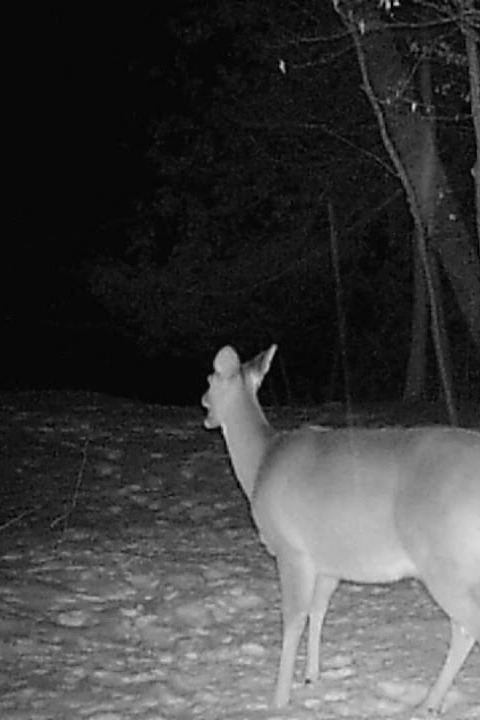 White-tailed deer on alert, a chase unsolved
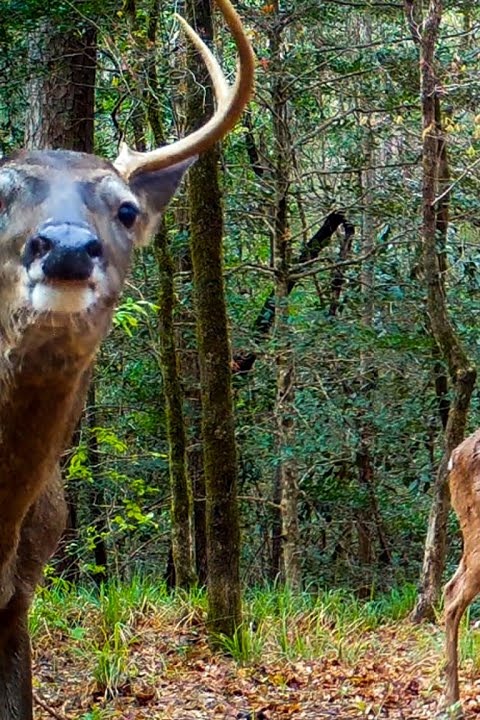 Whitetail buck eyes an Alabama trail camera
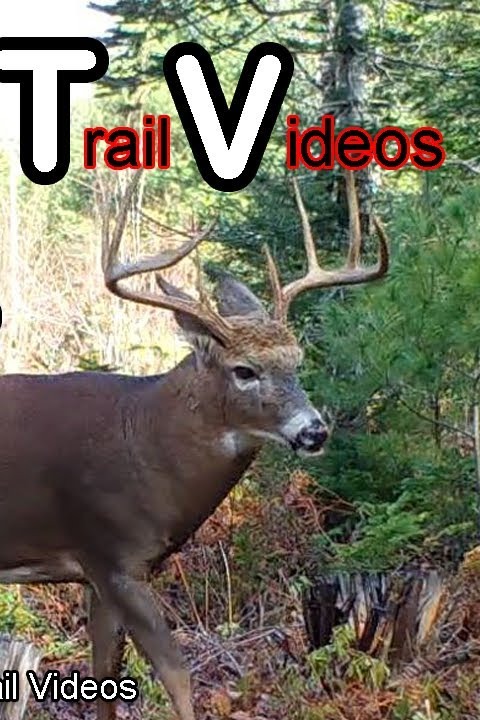 Maine white-tailed buck in polished fall antler
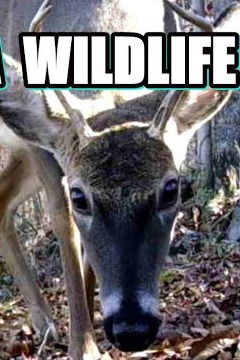 White-tailed buck checks a Tennessee trail camera
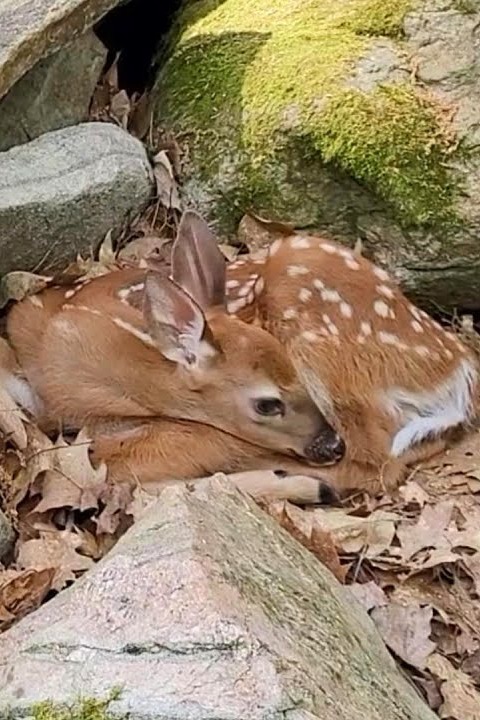 Lone white-tailed fawn waits in the dry leaves
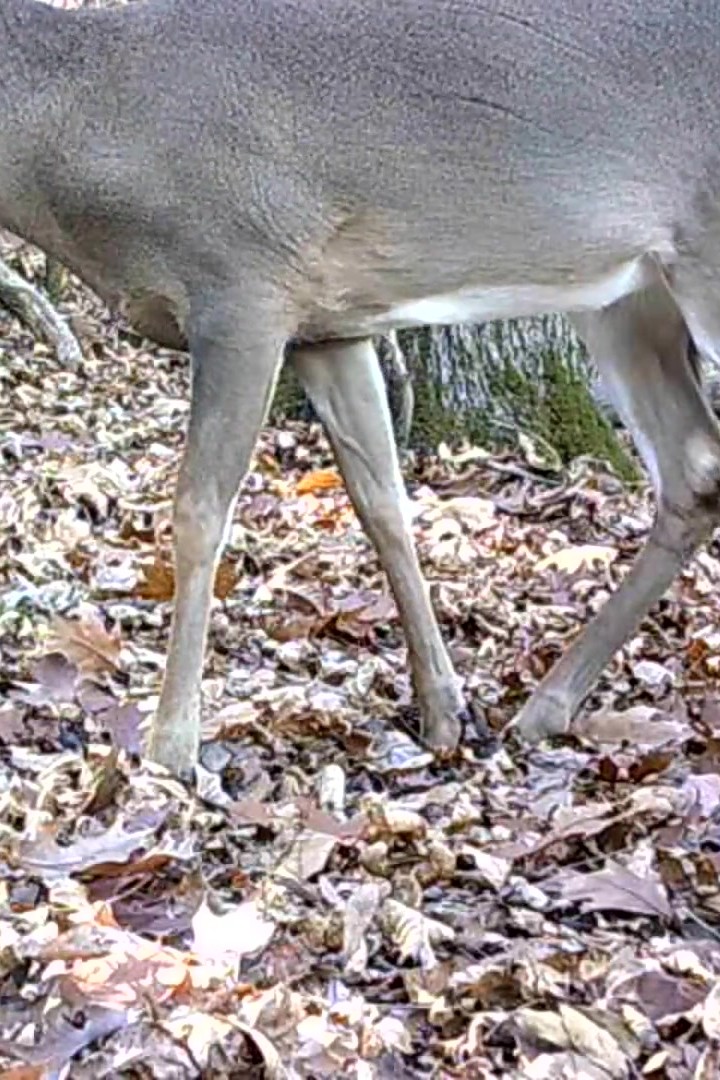 Tennessee whitetail buck, head low over leaves
 Close-up of a white-tailed buck in fall leaves
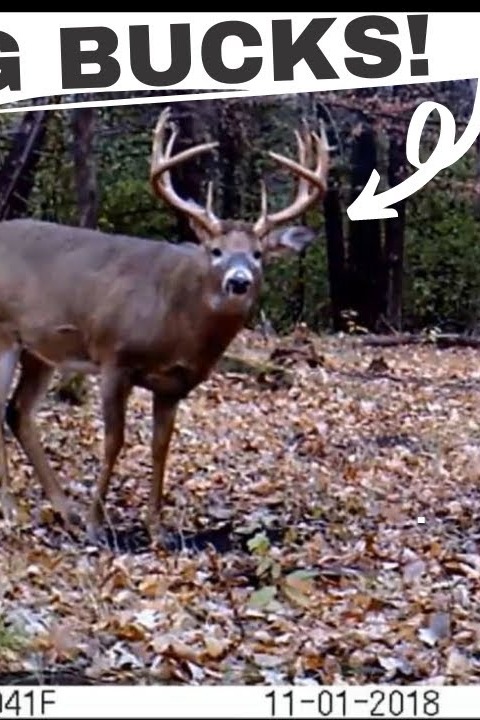 Wide-racked white-tailed buck faces the camera
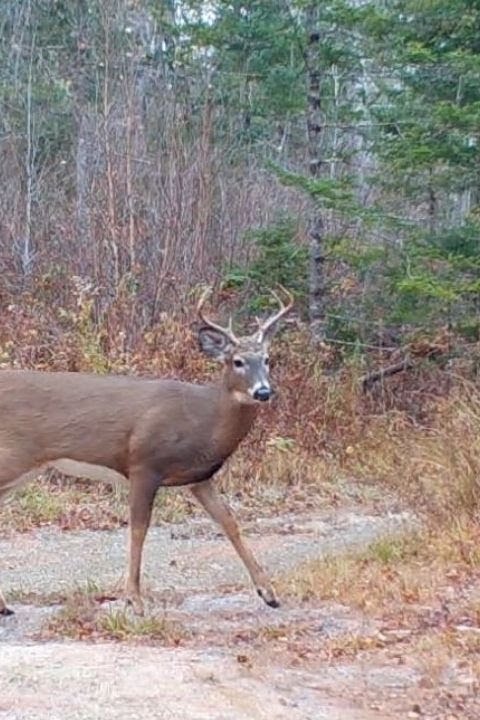 Rut-season white-tailed buck on a Maine trail
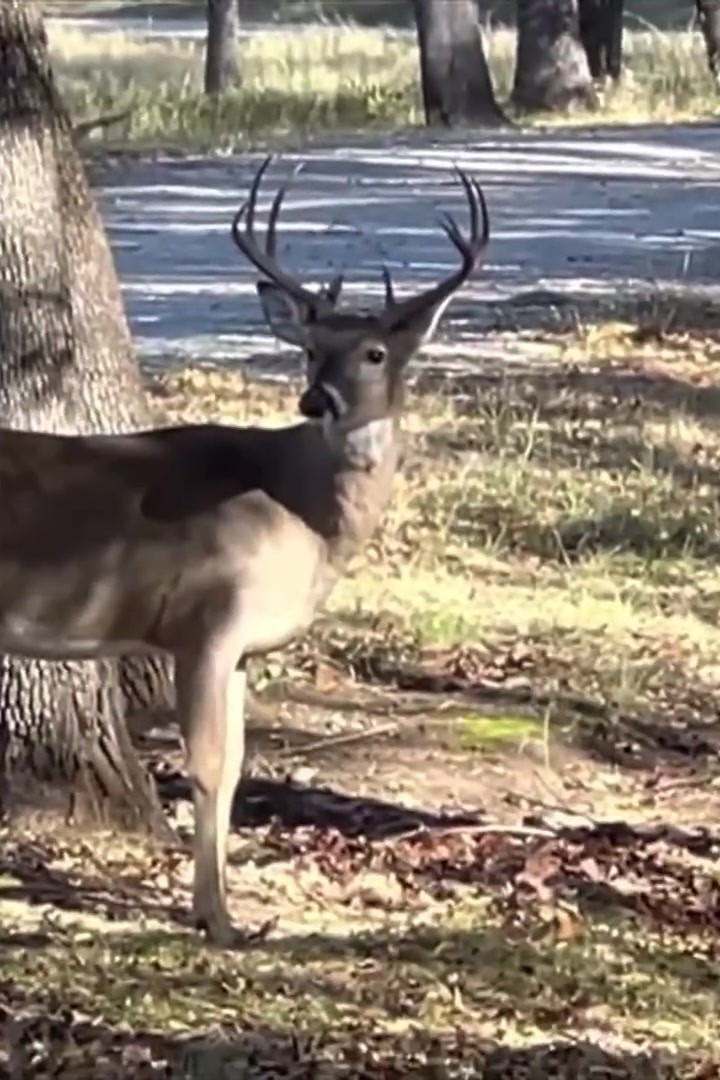 White-tailed buck faces the camera in the rut
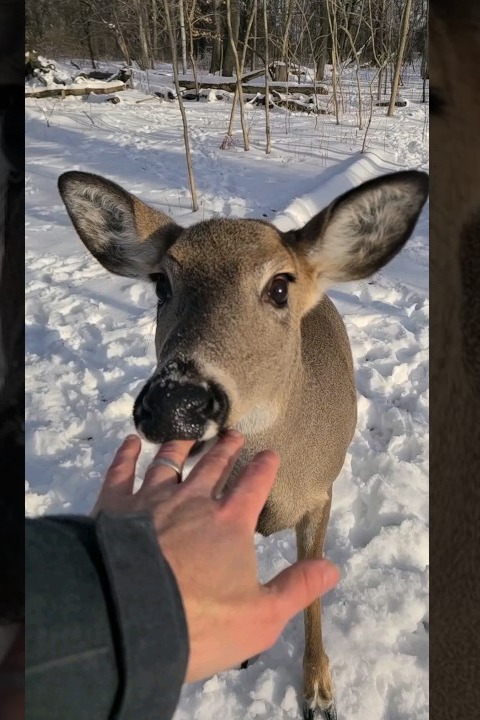 White-tailed deer at a birder's fingertips
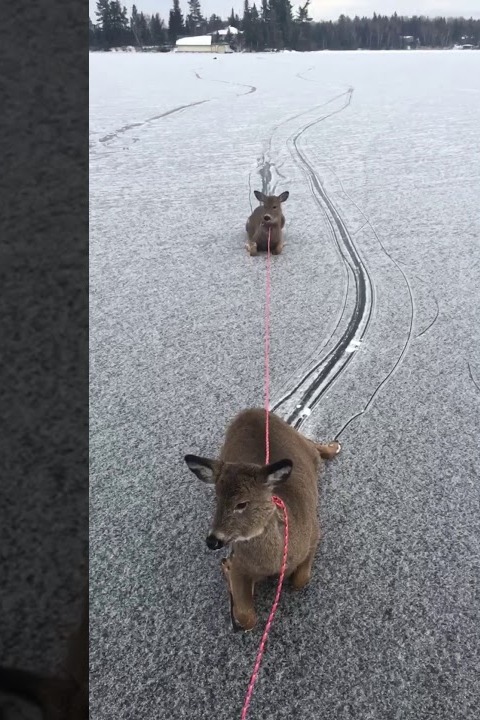 Skater tows white-tailed deer off a frozen lake
A trail camera set four feet off the ground catches a white-tailed deer being chased by something its filmer cannot identify.
An Alabama trail camera runs six months at a junction of trails, where deer come often at first and seldom later, and three bucks share one frame.
A group of Maine bucks crosses one filmer's woods roads from May to November as velvet gives way to hardened, polished antler.
In a rut-week roundup from hidden cameras on a Tennessee ridge, bucks move in daylight while a nearly grown fawn gets turned away by his mother.
A spotted white-tailed fawn left alone among the stones at a home holds still under a chipmunk's stare before it runs, and later walks off beside its mother.
In the East Tennessee foothills in mid-November, a white-tailed buck holds his head low over the leaves at a hidden trail camera while bucks of every size trail the does.
On a ridge in the East Tennessee foothills of the Smokies, a white-tailed buck comes close enough to a hidden trail camera to fill the frame in the week of the first freeze.
Near Ottawa, Ontario, ten trail camera clips of rutting white-tailed bucks, one of them a 14-pointer, show bucks pawing scrapes, working licking branches and chasing does.
In the week ending November 6, a white-tailed buck with a branched rack crosses a gravel ATV trail in Penobscot County, Maine, in full daylight while a bigger buck on the same cameras keeps mostly to the night.
On an Oklahoma ranch in mid-November, a wild white-tailed buck in full rut runs the other deer off a feeder six or seven yards from the camera.
A white-tailed deer in winter coat walks up to a birder with chickadees landing on his hand in a snowy forest and takes his finger in its mouth.
On an Ontario lake in December, a skater ropes three stranded white-tailed deer and tows them to the edge of the ice, where they can stand again.
Sources
- Odocoileus virginianus (white-tailed deer), Animal Diversity Web, University of Michigan
- Odocoileus virginianus, White-tailed Deer, NatureServe Explorer
- White-tailed Deer fact sheet, Connecticut Department of Energy & Environmental Protection
- White-Tailed Deer field guide, Missouri Department of Conservation
- White-tailed Deer field guide, Oklahoma Department of Wildlife Conservation
- White-tailed Deer species information, Maine Department of Inland Fisheries and Wildlife
- Managing Your Habitat for White-tailed Deer: A Small Woodlot Owner's Guide (Aug. 2023), Maine Department of Inland Fisheries and Wildlife
- Living with wildlife: Deer, Washington Department of Fish and Wildlife
- White-tailed Deer - Fire Island National Seashore, National Park Service
- The Park After Dark: White-Tailed Deer, National Park Service, Chattahoochee River National Recreation Area