The Story
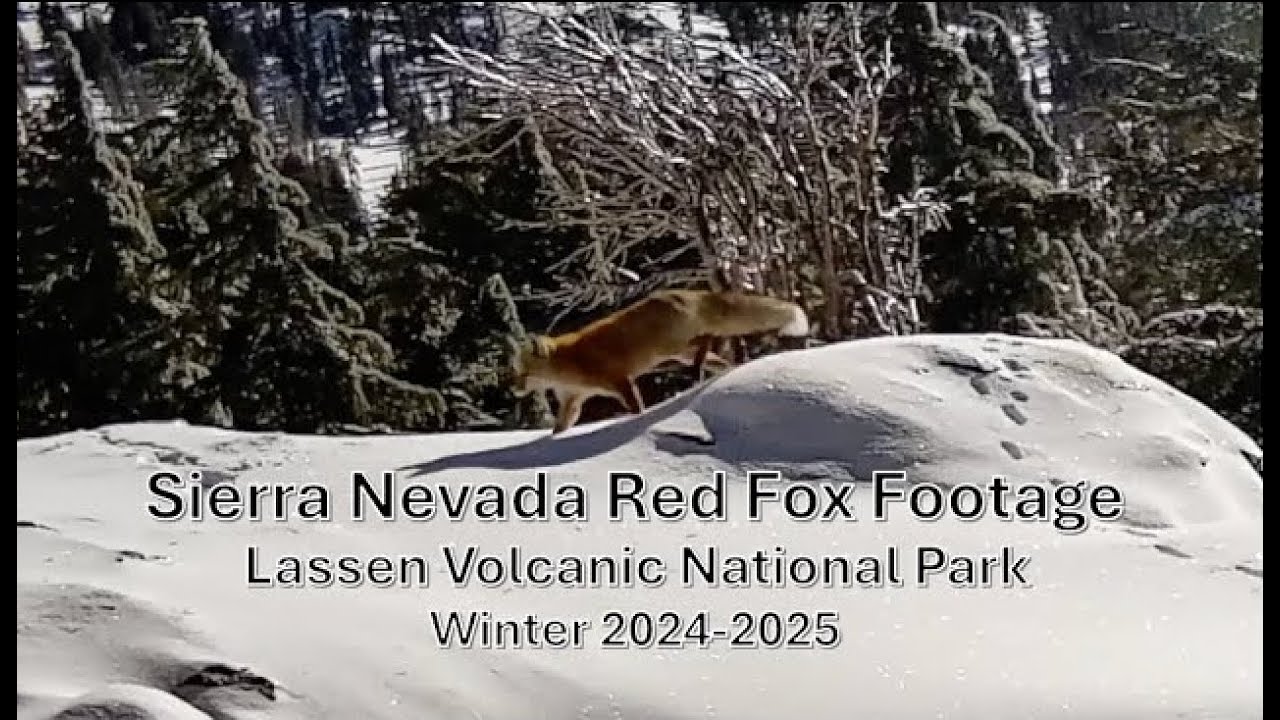
Winter sun lights a snow-capped rock high in the Mt. Lassen area, and a Sierra Nevada red fox walks its crest, tail out straight behind. Dark conifers and frost-stiff brush stand at its back.
A trail camera caught this at roughly 8,500 feet in Lassen Volcanic National Park in November and December of 2024. The filmer, working under a park permit, has spent three years after the small population of Sierra Nevada red foxes around Mt. Lassen. This was the second winter of leaving cameras up high, and the aim is practical: narrow down where to put high-resolution camera traps.
The outcrop draws repeat visits, and on top of it a fox stretches and curls up in full sun. A bed in the open on a winter mountain looks like a poor choice. For a red fox it is the preferred one. The species likes to sleep in the open even in winter and treats a den mainly as a nursery. In cold wind it wraps its long tail over the bare skin of its nose and foot pads.
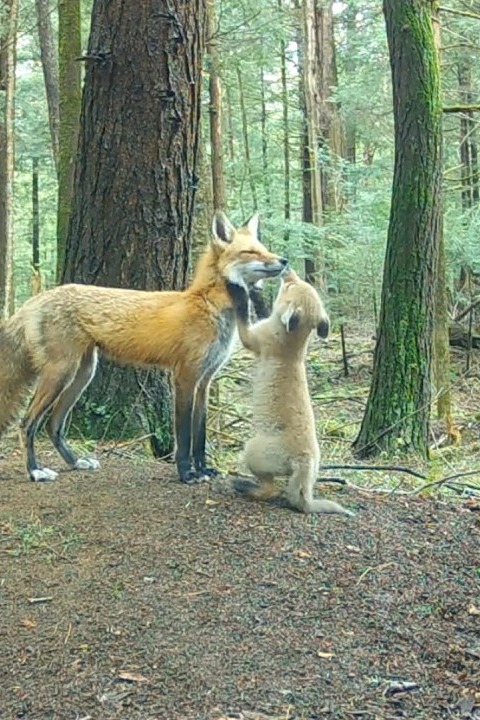
Mountain red foxes in the Sierra Nevada carry a dense winter coat, and fur grows over the toe pads so each foot works like a snowshoe. This one also wears the reddish coat and the long, bushy, white-tipped tail that mark any red fox.
Being out in daylight is less odd than it looks. Red foxes keep mostly to dawn, dusk and night, yet daytime sightings are not unusual, and winter tilts the clock further. Voles and mice grow more active by day beneath deep snow, so foxes turn more day-active to match. A red fox can hear a vole chewing as far as 100 feet away, and under as much as 3 feet of snow.
A sunny rock makes a sound place to spend a winter day. For the filmer, a clip like this is the point of the whole exercise: a fox, a spot and a season, logged toward where the high-resolution traps should go.