The Story
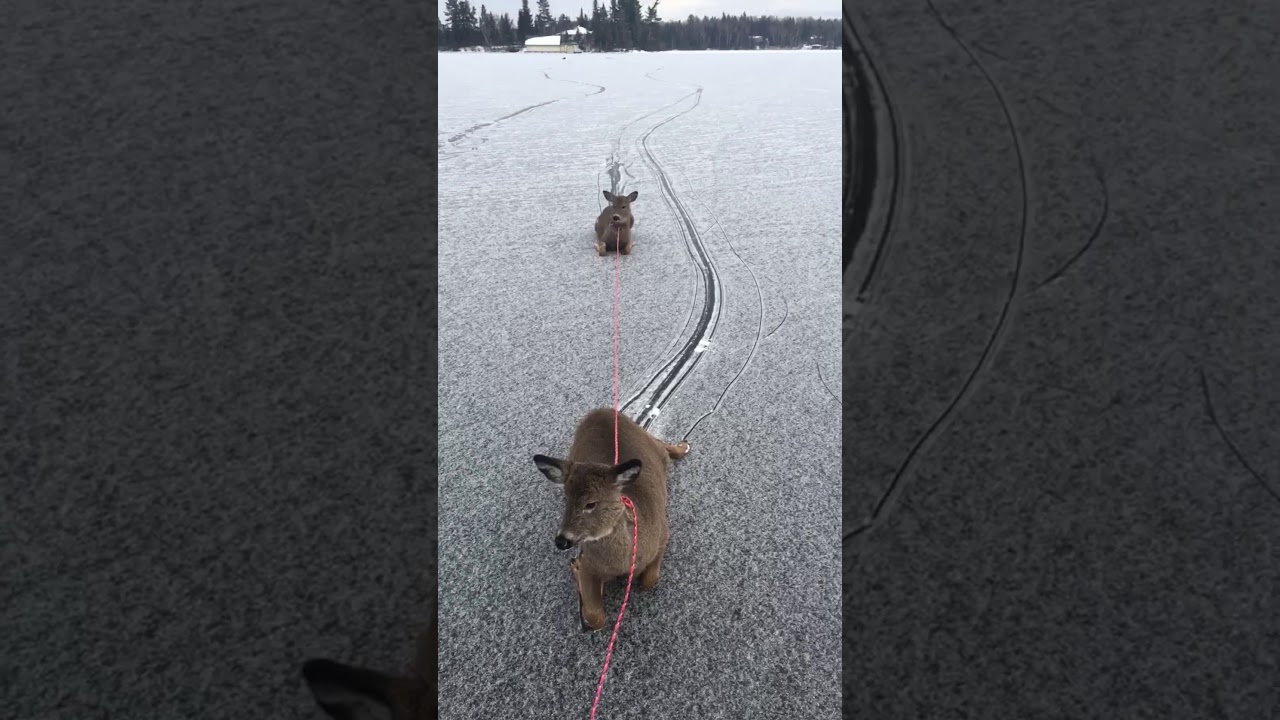
Two white-tailed deer sit on the frozen skin of an Ontario lake, tied to the same rope. They are going nowhere on their own.
There were three of them. On December 3 a man out skating on his lunch break came across the deer stranded on the ice: a doe and two younger animals, unable to get their footing. He went back to work for rope. The ice was still too thin for any vehicle, so skates were the only way to reach them.
He ties the rope around each deer and pulls. What follows is part rescue, part freight haul. The deer barely resist. They ride it out sitting down, and the last two slide across the lake together on one rope, more cargo than passengers.
White-tailed deer are good swimmers that enter streams and lakes to escape predators or insects, and they can bound at up to 30 miles per hour through tangled forest. Neither skill helps here. On this ice the deer cannot get their footing at all, and they stay down until the rope brings them to the edge.
They are at least dressed for the cold. In September white-tailed deer molt into dense woolly underfur beneath long hollow guard hairs, which can be raised for extra insulation. Through autumn they store fat under the skin, between muscles and even in the leg bones, which by late fall can make up 10 to 25 percent of body weight. The species' basic social unit is a doe and her fawns, though nothing in the footage shows that these two younger deer are hers.
At the edge of the ice the deer find their feet and stand. The two younger ones take off running at once. The doe stays behind, with what looked like an injured hip or leg. The rescuer called Ontario's Natural Resources Ministry, but with the lake not entirely frozen, nobody could safely go out to check on her right away.