My Crittercam
My Crittercam › Moose

Skiing backwards ahead of a full-speed moose

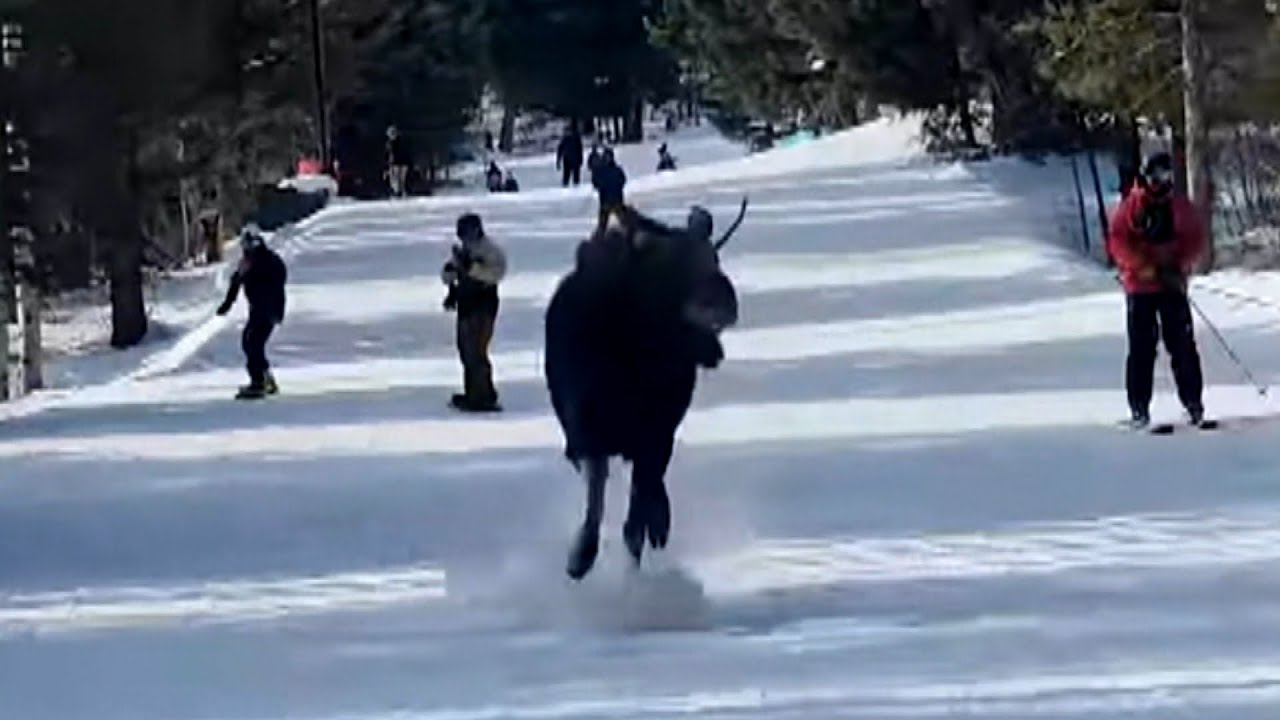
A dark moose runs toward the camera down a snowy ski run with its head turned aside, snow spraying at its hooves, a snowboarder at left and more people on the slope behind it.

Footage: Inside Edition · 1:09 · uploaded February 9, 2024
Written by My Crittercam · published November 6, 2026

The Story

Skiing backwards down a run at Jackson Hole Mountain Resort in Wyoming, one man keeps his camera on a moose at full speed, barreling down the slope toward him.

His group has only just come back to the slopes after lunch. One of them passes the animal first and does not see it, eyes on the hill, until he hears the others yell. Moose.

The man going backwards calls out a warning to the skiers around him, and it is short: go faster. Sound advice, and hard to follow. Moose can run 35 miles per hour, and this is the largest member of the deer family. The Alaska Department of Fish and Game says adults can range from 800 to 1,600 pounds. Snow sprays at this one's hooves as the long legs reach down the run.

Whether this is a chase is harder to call. The same agency says moose usually flee when threatened, though they can turn aggressive when harassed. Its warning signs are raised hairs on the hump, ears laid back, lip licking or a slow approach. Nobody skiing backwards in front of a moose has much time to study its hump, and a slow approach is plainly off the table. The agency's advice for a real charge is to run and get behind something solid, such as a tree. Here the trees stand along the edge of the run.

Moose on a hill are usually standing, one of the group says, picking at trees or going by at a slow walk. He has never seen one at full speed. That fits the winter menu. Moose eat large quantities of willow, birch and aspen twigs through fall and winter, so a moose at a tree is a moose at work.

In the end the moose settles the matter itself and makes its way back into the woods.
Field Guide

A moose at full speed comes down a Jackson Hole ski run toward a skier who is going backwards and filming it. Full field guide for the Moose

Common nameMoose
Scientific nameAlces alces
FamilyCervidae (Deer family)
Weight800 lb (small adult female) to 1,600 lb (large adult male).Alaska Department of Fish and Game · Animal Diversity Web, University of Michigan
SizeAdults stand on average 5 to 7 feet at the shoulder; total length about 9 feet (Maine).National Park Service · Maine Department of Inland Fisheries and Wildlife · Animal Diversity Web, University of Michigan
DietBrowser: leaves and shoots in summer, twigs of willow, birch and aspen in fall and winter, plus aquatic plants. Up to 70 lb of food a day.Animal Diversity Web, University of Michigan · Alaska Department of Fish and Game · National Park Service
RangeMuch of Alaska and Canada, the northern edge of the contiguous US, and south along the Rocky Mountains to Utah and Colorado.Animal Diversity Web, University of Michigan
Active whenCrepuscular: most active at dawn and dusk.Animal Diversity Web, University of Michigan · Maine Department of Inland Fisheries and Wildlife
LifespanRarely more than 16 years in the wild; one cow lived to 22.Alaska Department of Fish and Game · Animal Diversity Web, University of Michigan
Conservation statusIUCN Red List: Least Concern. NatureServe: G5; N5 in US and Canada.Animal Diversity Web, University of Michigan · NatureServe Explorer
Cam notes · Camerafilmed by a skier going backwards
Cam notes · Time of dayday, after lunch
Cam notes · Seasonwinter, snow on the ground
Cam notes · PlaceJackson Hole Mountain Resort, Wyoming

Habitat

Behavior

Questions

How fast can a moose run?

Moose can run 35 miles per hour. Alaska's game department says adults can range from 800 pounds for a small cow to 1,600 pounds for a large bull.National Park Service · Minnesota Department of Natural Resources · Alaska Department of Fish and Game

Are moose dangerous to people?

Moose usually flee when threatened, yet more people in Alaska are injured by moose than by bears yearly. They can become aggressive when harassed, when hungry and tired in deep winter snow, or as cows guarding calves; rutting bulls may be too.Alaska Department of Fish and Game

How can you tell a moose might attack?

Raised hairs on the hump, ears laid back, lip licking or a slow approach are warning signs. If charged, run and get behind something solid such as a tree, building or car.Alaska Department of Fish and Game

Latest clips