The Story
Something is running behind a white-tailed deer, and the camera gives it no name. The lens sits four feet off the ground, and the filmer cannot tell what it is.
That is the whole case file. A deer goes by with a pursuer behind it, the pursuer cannot be made out, and the rest of the reel settles into about seven days and nights of trail camera footage. Whatever gave chase seems to carry a long tail, and little else can be pinned down. The deer, presumably, got a better look.
A white-tailed deer in flight has options. The species can bound at up to 30 miles per hour through tangled forest. An alarmed deer raises its tail to show the white underside, a flag that flashes danger to other deer nearby, and a fleeing deer waves it side to side. The alarm whistle, a snort or blow forced out through the nostrils, warns all deer nearby of a possible predator. How much of that this deer did is not on the record.
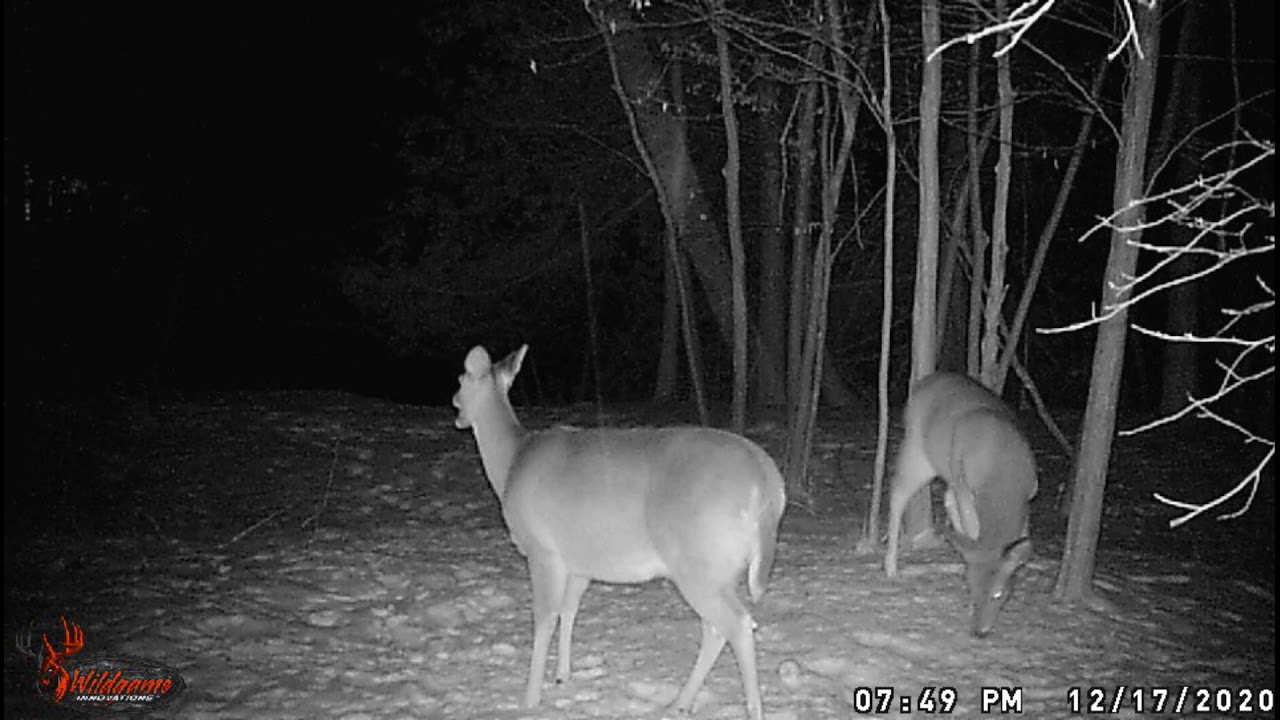
A quieter frame from the same footage carries the stamp 7:49 PM, 12/17/2020. Two white-tailed deer stand under infrared on pale ground in front of bare trees, with nothing to tie them to the chase. One has its head down at the ground. The other has its head up and faces left, ears raised. Deer are sometimes called an edge species, thriving where openings meet cover and feeding in openings close to escape cover, and this pair stands on that kind of seam.
The best witness to any chase is the ground, and a camera does not read the ground. Deer tracks are heart-shaped and pointed, 2 1/2 to 4 inches long and split down the middle, and a running deer may leave dewclaw dots behind each one, especially when bounding on mud or snow. Prints of another shape would point to another animal; a second line of hearts, to a deer. Whether anyone went to look, the filmer's notes do not say.