Canada lynx field guide
Field Guide
| Common name | Canada lynx |
|---|---|
| Scientific name | Lynx canadensis |
| Family | Felidae (cats) |
| Size | 30 to 35 in (75 to 90 cm) long; tail 50 to 130 mmU.S. Fish & Wildlife Service · Animal Diversity Web, University of Michigan Museum of Zoology |
| Weight | 15 to 30 pounds (6 to 14 kilograms); males slightly heavier than femalesU.S. Fish & Wildlife Service · Animal Diversity Web, University of Michigan Museum of Zoology |
| Lifespan | Up to 14.5 years in the wild; 26.75 years recorded in captivityAnimal Diversity Web, University of Michigan Museum of Zoology |
| Diet | Carnivore; snowshoe hares make up 35-99% of prey biomass, plus rodents, birds, fish and carrionUSDA Forest Service · Animal Diversity Web, University of Michigan Museum of Zoology |
| Active when | Most active between dusk and dawn; hides during the dayUSDA Forest Service |
| Range | Boreal forest across most of Canada and Alaska; in the contiguous US, resident breeding populations in northern Maine/New Hampshire, NE Minnesota, NW Montana/N Idaho, N-central Washington, western ColoradoU.S. Fish & Wildlife Service |
| Conservation status | IUCN Red List: Least Concern; NatureServe: G5 (Secure); COSEWIC: Not at Risk; US Endangered Species Act: Threatened (contiguous US distinct population segment, listed 2000)Animal Diversity Web, University of Michigan Museum of Zoology · NatureServe Explorer · U.S. Fish & Wildlife Service |
Field Marks
- Tail is short and black all around the tip, as if dipped in ink; a bobcat's tail is black only on top of the tip with a white underside.Minnesota Mammals, Natural Resources Research Institute, University of Minnesota Duluth · Alberta Institute for Wildlife Conservation
- Long black ear tufts, much longer than a bobcat's.U.S. Fish & Wildlife Service · Ontario Parks
- Exceptionally large, furry paws, much larger than a bobcat's.U.S. Fish & Wildlife Service · Minnesota Mammals, Natural Resources Research Institute, University of Minnesota Duluth · Alaska Department of Fish and Game
- Long hind legs; the hind legs appear longer than the front legs.U.S. Fish & Wildlife Service · Minnesota Department of Natural Resources
- Grizzled gray fur; Alaska describes it as buffy grey with indistinct spotting, while the bobcat has a more reddish-brown coat with distinct black spots.U.S. Fish & Wildlife Service · Alaska Department of Fish and Game · Alberta Institute for Wildlife Conservation
- Long hair on the neck in winter and a pronounced goatee under the chin.Animal Diversity Web, University of Michigan Museum of Zoology · Minnesota Department of Natural Resources
Habitat
- Distribution is closely tied to the boreal spruce-fir forest known as the taiga, across most of Canada and Alaska.U.S. Fish & Wildlife Service
- In Ontario, lynx live throughout the boreal forest, which generally means north of Algonquin Provincial Park.Ontario Parks
- Generally found in boreal and montane coniferous or mixed forest with thick undergrowth; sometimes enters open forest, rocky areas and tundra to forage.NatureServe Explorer
- In the Northwest Territories, habitat is open mature coniferous forest, advanced successional forest and black spruce bogs.Government of the Northwest Territories
- Dens are typically in a hollow tree, under a stump or in thick brush, often in mature or old-growth stands with many fallen logs.NatureServe Explorer · USDA Forest Service
- The major limiting factor for lynx is the abundance of snowshoe hare, which in turn is limited by the availability of winter habitat.NatureServe Explorer
Behavior
- Lynx and snowshoe hare populations rise and fall in linked cycles of about 9.6 years, with lynx lagging slightly behind the hares.Animal Diversity Web, University of Michigan Museum of Zoology
- Lynx numbers fluctuate up to 10-fold over the roughly 10-year cycle; in Alberta density ranged from 0 to 10 lynx per 100 sq km.Government of the Northwest Territories
- When hares are scarce, kitten deaths rise and pregnancy rates fall; prey scarcity can kill nearly all young.Animal Diversity Web, University of Michigan Museum of Zoology · NatureServe Explorer
- When hares are scarce, lynx use other food more; grouse, ptarmigan, squirrels and microtine rodents are regularly taken.Alaska Department of Fish and Game
- Prey is stalked to within a few short bounds and pounced on; some lynx wait in ambush for hours.Animal Diversity Web, University of Michigan Museum of Zoology
- Females and young sometimes hunt hares together, spreading out in a line; prey flushed by one is often caught by another.Animal Diversity Web, University of Michigan Museum of Zoology
- In fall and winter lynx may kill deer weakened by the rut and also feed on carcasses left by hunters.Animal Diversity Web, University of Michigan Museum of Zoology
- Solitary; adults typically avoid each other except during the winter breeding season.Animal Diversity Web, University of Michigan Museum of Zoology
- Home ranges run from 5 to more than 100 square miles; lynx normally travel 1 to 5 miles per day.Alaska Department of Fish and Game
- Exploratory movements of up to 600 miles (1,000 km) have been recorded.USDA Forest Service
- Breeding months vary by source: ADF&G (Alaska) gives March and early April, with kittens born about 63 days later; University of Minnesota Duluth's Minnesota Mammals gives January/February.Alaska Department of Fish and Game · Minnesota Mammals, Natural Resources Research Institute, University of Minnesota Duluth
- In Alaska most litters have two to four kittens, sometimes as many as six (ADF&G); ADW gives typically 2 or 3, ranging 1 to 5. Young stay with the mother until the next winter's mating season.Alaska Department of Fish and Game · Animal Diversity Web, University of Michigan Museum of Zoology
- Lynx make house-cat-like sounds: mews, yowls, spits and hisses, and yowl and growl most often during the breeding season.San Diego Zoo Wildlife Alliance
- Two lynx filmed caterwauling face to face on an Ontario road were likely in a mating-season standoff, a ritualized way to avoid a real fight, according to Panthera's Luke Hunter.Live Science
- Lynx are good tree-climbers and swimmers.Minnesota Mammals, Natural Resources Research Institute, University of Minnesota Duluth
Winter
- Large broad feet work as snowshoes for winter hunting and travel; with long hind legs they suit hunting hares in deep, powdery snow and likely give a seasonal edge over other terrestrial hare predators.Alaska Department of Fish and Game · U.S. Fish & Wildlife Service
- Paws carry long, thick fur that keeps the toes warm in winter; the toes spread wide like snowshoes for soft snow, and hair on the soles gives traction on slippery surfaces.San Diego Zoo Wildlife Alliance
- Bobcats have smaller feet without furry soles, so they are less suited to heavy snow.San Diego Zoo Wildlife Alliance
- Thick fur lets lynx stay active all winter; neck hair grows especially long in winter.Ontario Parks · Animal Diversity Web, University of Michigan Museum of Zoology
- Lynx tracks are usually around 7-8 cm wide.Ontario Parks
Questions
How big is a Canada lynx?
Canada lynx are 30 to 35 inches (75 to 90 cm) long and weigh roughly 15 to 30 pounds (6 to 14 kg). They are similar to a bobcat in size.U.S. Fish & Wildlife Service
How do I tell a lynx from a bobcat?
A lynx tail tip is black all the way around, while a bobcat's is black only on top with a white underside. Lynx also have longer ear tufts, much larger paws and longer hind legs.Minnesota Mammals, Natural Resources Research Institute, University of Minnesota Duluth · Alberta Institute for Wildlife Conservation · U.S. Fish & Wildlife Service
What does a lynx eat?
Snowshoe hares make up 35-99% of the prey biomass it eats year-round. It also takes rodents, birds, fish and carrion.USDA Forest Service · Animal Diversity Web, University of Michigan Museum of Zoology
Why do lynx numbers go up and down?
In the northern parts of the range, lynx populations track the snowshoe hare cycle of about 10 years; in southern parts they are not cyclical. When hares crash, fewer kittens survive and fewer females get pregnant.Animal Diversity Web, University of Michigan Museum of Zoology · USDA Forest Service
Why are lynx yowling or screaming?
Lynx yowl and growl most often during the breeding season. Face-to-face caterwauling is likely a mating-season standoff meant to avoid a real fight.San Diego Zoo Wildlife Alliance · Live Science
When are lynx active?
Lynx are most active between dusk and dawn. They hide during the day.USDA Forest Service
Where does a lynx sleep or raise kittens?
Dens are typically in a hollow tree, under a stump or in thick brush. Females give birth in fallen logs, stumps or tangles of roots and branches.NatureServe Explorer · Animal Diversity Web, University of Michigan Museum of Zoology
How long do lynx live?
Wild lynx have lived as long as 14.5 years. In captivity, 26.75 years has been recorded.Animal Diversity Web, University of Michigan Museum of Zoology
Is the Canada lynx endangered?
The IUCN Red List rates it Least Concern and NatureServe ranks it G5 (Secure). In the contiguous US it was listed as threatened under the Endangered Species Act in 2000.Animal Diversity Web, University of Michigan Museum of Zoology · NatureServe Explorer · U.S. Fish & Wildlife Service
Where do Canada lynx live?
Lynx live across most of Canada and Alaska in boreal spruce-fir forest, in Ontario generally north of Algonquin Provincial Park. Contiguous-US resident breeding populations: northern Maine/New Hampshire, NE Minnesota, NW Montana/N Idaho, N-central Washington, western Colorado.U.S. Fish & Wildlife Service · Ontario Parks
Clips
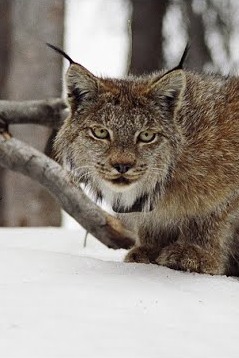 Canada lynx stares down the lens in snow
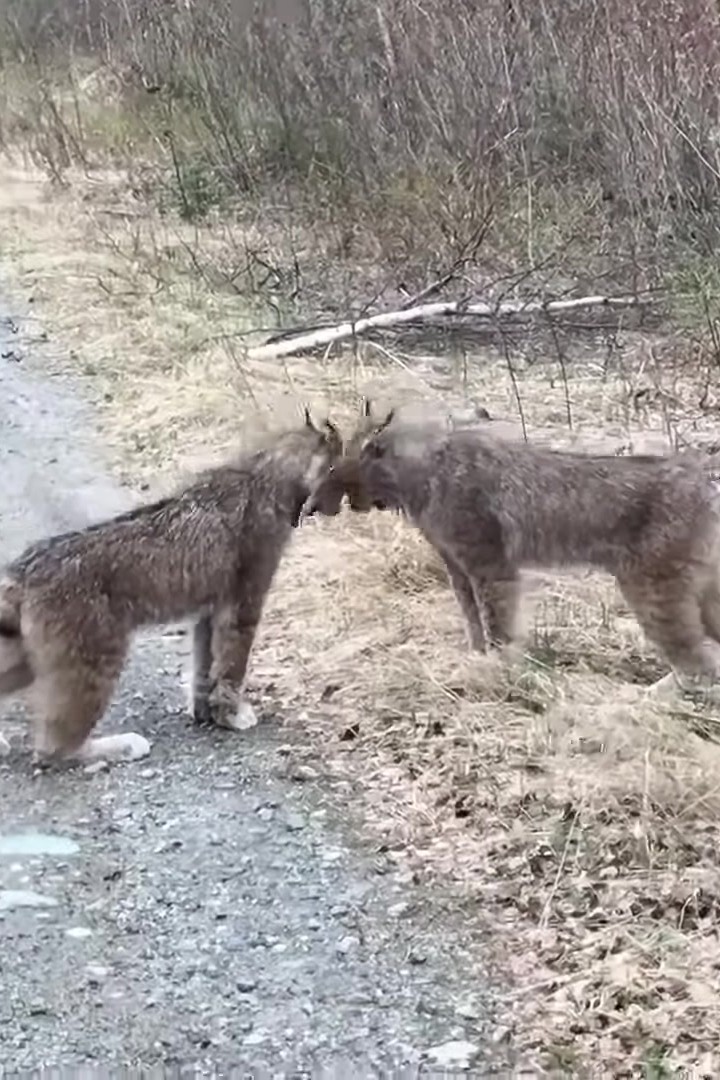 Two Canada lynx square off face to face
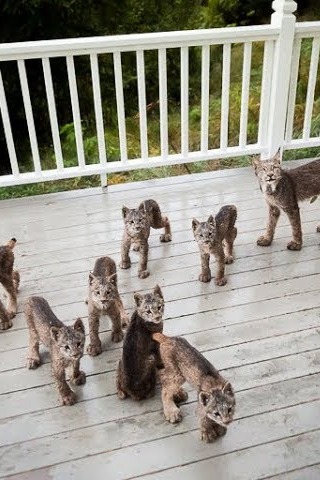 Canada lynx mother and seven kittens on a deck
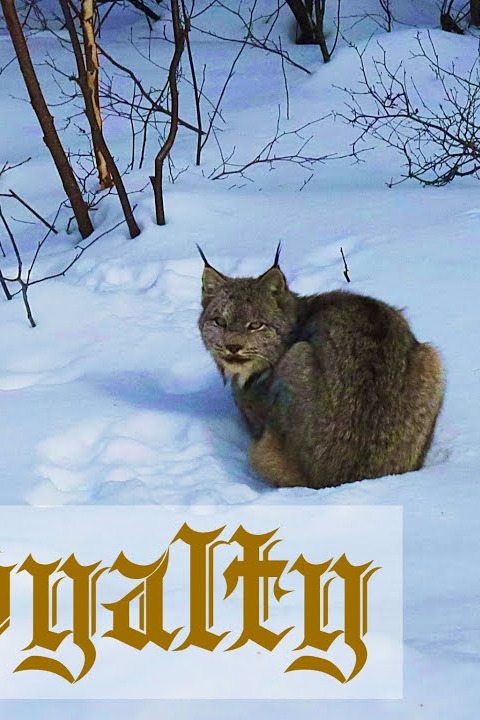 Canada lynx holds its ground in the snow
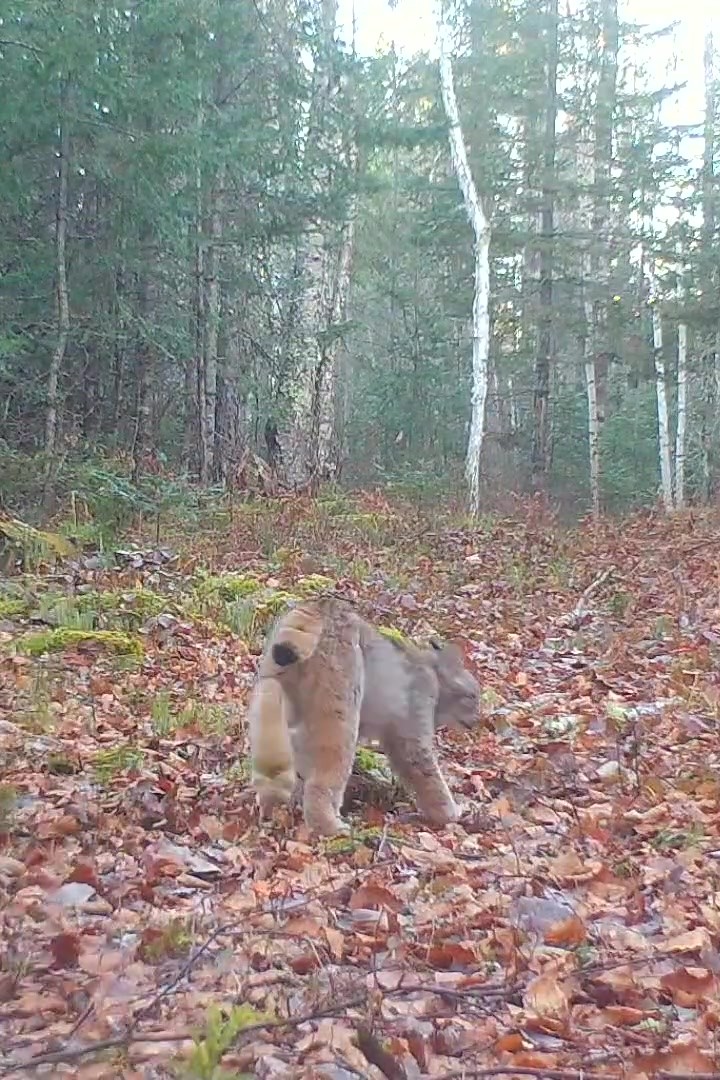 Canada lynx sits for a trail cam in fall leaves
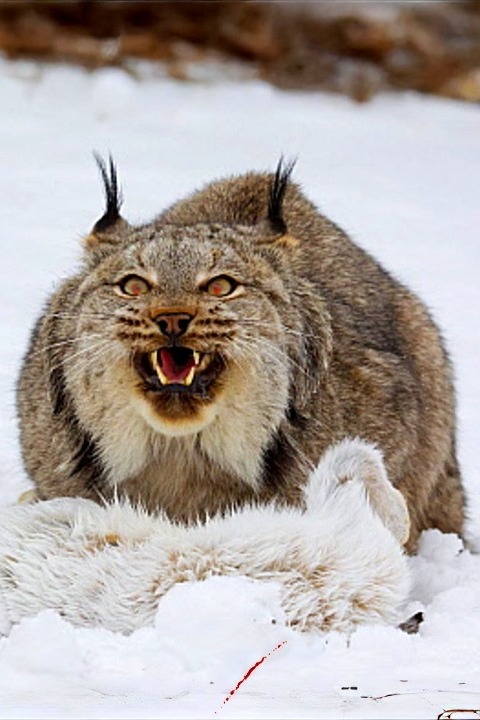 Canada lynx snarls over a hare in the snow
A Canada lynx crouched in daylight snow fronts Colorado Parks and Wildlife's film on bringing the cat back to the state's high country and growing the hare forests that keep it there.
Two Canada lynx stand face to face beside a gravel road in Ontario in mid-May, yowling at each other and dipping their heads, then pulling up short of a fight.
A Canada lynx mother and seven kittens who lined up on an Alaska deck in September come back in the snow to wrestle on the same boards.
Spotted from a moving vehicle, a Canada lynx sits hunched in daylight snow and lets the camera close to about 20 feet without bolting.
A Canada lynx sits facing a trail camera in autumn leaves in Voyageurs National Park, one of a mother and two kittens that make up the first lynx family documented there.
A Canada lynx snarling over a white hare in the snow fronts a film that pairs the cat's screams with a deep-snow hare chase.
Sources
- Canada Lynx (Lynx canadensis), U.S. Fish & Wildlife Service
- Lynx canadensis (Canadian lynx), Animal Diversity Web, University of Michigan Museum of Zoology
- Lynx canadensis, Canada Lynx, NatureServe Explorer
- Winter royalty: the Canadian Lynx, Ontario Parks
- Canada Lynx (Lynx canadensis) species search, Government of the Northwest Territories
- Lynx (Lynx canadensis) Species Profile, Alaska Department of Fish and Game
- Canada lynx (Lynx canadensis), Minnesota Department of Natural Resources
- Lynx and Bobcat, San Diego Zoo Wildlife Alliance
- Lynx canadensis (Fire Effects Information System species review), USDA Forest Service
- Lynx (Lynx canadensis), Minnesota Mammals, Natural Resources Research Institute, University of Minnesota Duluth
- Differences Between Bobcats and Canada Lynx: How to Tell them Apart, Alberta Institute for Wildlife Conservation
- These Two Angry, Yelling Lynx Are Probably Fighting About Sex (Luke Hunter, Panthera, interviewed), Live Science